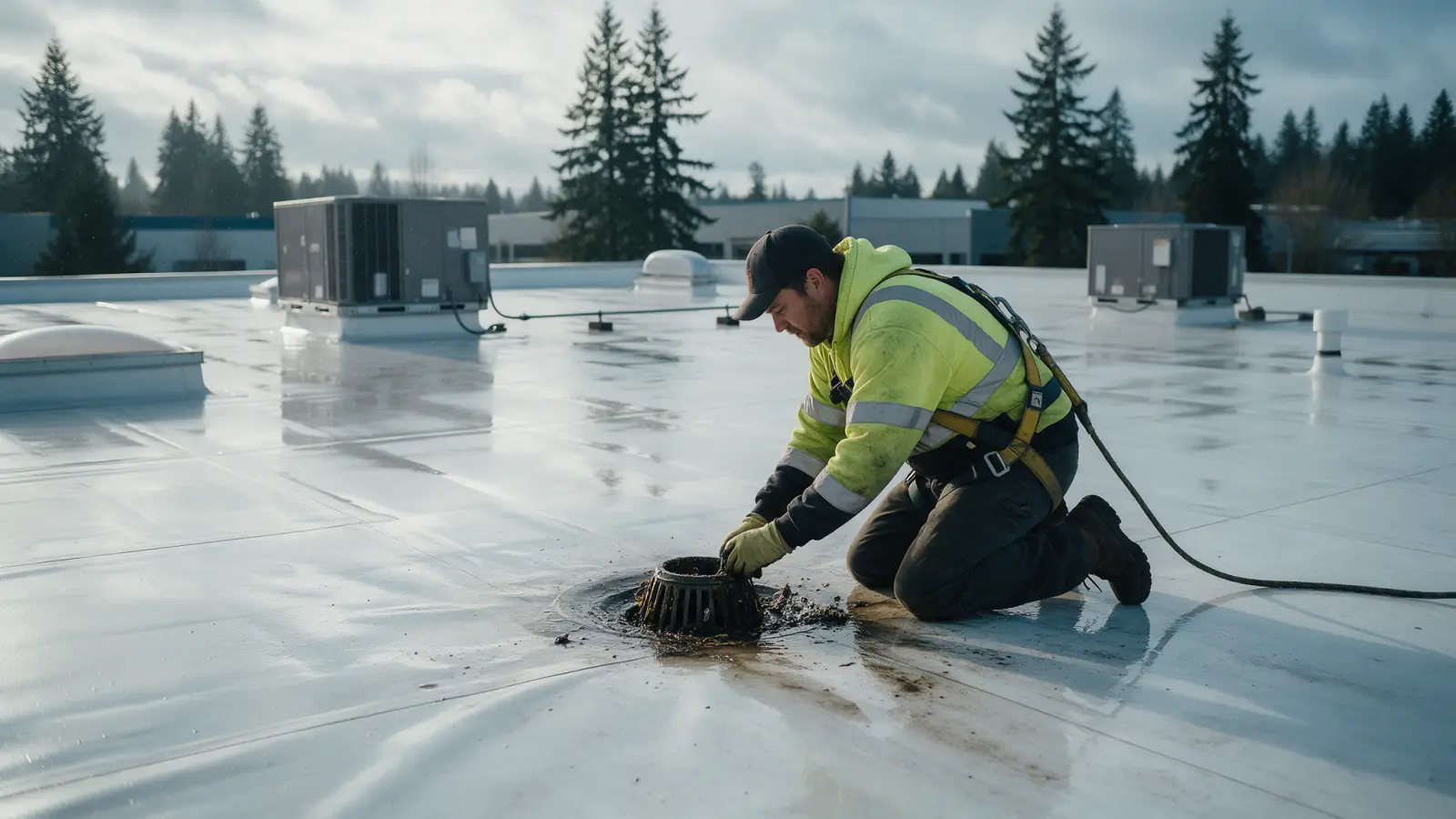
The short answer: inspect the roof at least twice a year, in late spring and early fall, plus after major windstorms. Clear every drain before October, check the details where leaks start (curbs, penetrations, seams and edges), and keep a dated photo log so small changes are easy to spot.
When should a commercial roof be inspected?
Common industry guidance calls for at least two inspections a year, plus checks after severe weather. In the Puget Sound area, timing matters more than the count. Most of the year's rain falls between October and March, and repairs that need dry weather get much harder once it starts. A useful rhythm looks like this:
| When | Focus |
|---|---|
| Late spring | Review winter damage, plan repairs for the dry months, check for moss and debris. |
| Summer | Do repairs, coatings and section replacements that need dry, warm weather. |
| Early fall | Clear drains and gutters, re-check repairs, look over rooftop units after summer service. |
| After windstorms | Check edge metal, coping, loose flashings and debris on the roof. |
| After any rooftop work | Look for punctures, screws, debris and new penetrations. |
How do you inspect a roof safely?
Roof edges, skylights and wet surfaces are serious fall hazards. Only people with proper training, safe access and fall protection, where required, should go on the roof. Never go up in rain, high wind or ice, and never step on skylights or translucent panels. Many owners have their roofing contractor do the inspection and walk the roof with them. That's often the safest and most useful way to learn what to watch.
What should you check on roof drainage?
- Every drain basket and strainer is in place and clear of leaves, needles, moss and trash.
- Overflow drains and scuppers are open and unobstructed.
- Gutters and downspouts are clear, attached, and discharging away from the building.
- There's no standing water two days after rain. Note and photograph any ponding areas.
- Drain clamping rings are tight and the membrane around them isn't split or lifting.
Pro tip: trees set your cleaning schedule
Buildings near tall conifers or deciduous trees may need drains cleaned more than twice a year, especially after leaves drop and after windstorms.
What should you look for on the membrane and seams?
- Open or lifting seams, fishmouths at laps, and seams that look different from the rest.
- Punctures, cuts and dents, especially along service paths to rooftop units.
- Blisters, wrinkles and areas that feel soft or spongy underfoot.
- Exposed reinforcement on single-ply roofs, or bare spots on granulated cap sheets.
- Moss, algae and plant growth, which hold moisture against the surface.
For what each defect means and how it's repaired, see flat roof patching and membrane repair. On metal roofs, add backed-out fasteners, rusted laps and loose ridge caps to the list. Metal roof leak repair covers those.
Which details need the closest look?
Leaks start at the details far more often than in the open field of the roof. Spend most of the inspection here:
- Rooftop unit curbs: flashing attached and sealed on all sides, no water backing up against the upslope side.
- Pipe boots and pitch pockets: no cracks, gaps or shrunken sealant. Pitch pockets topped up.
- Exhaust fans: no grease on the membrane, and grease containment in place over kitchens.
- Skylights and hatches: curb flashing intact, domes not cracked, gaskets in place.
- Parapets and walls: base flashing attached, counterflashing tight, coping joints sealed. See parapet wall and flashing repair.
- Edge metal: secure, with no lifted sections that wind can catch.
How does rooftop equipment cause leaks?
HVAC units, condensers and exhaust fans bring frequent foot traffic and service work onto the roof. Technicians drop screws, set panels on the membrane and sometimes add new penetrations. Condensate lines that drain onto the roof can wear a channel in the surface. After every service visit, walk the area around the equipment, or ask the HVAC contractor to confirm nothing was left behind. Walkway pads along common routes protect the membrane from wear.
What should you check from inside?
- Ceiling tiles on the top floor for new stains, especially near rooftop units and exterior walls.
- The underside of the roof deck, where visible, for rust or water marks.
- Musty odors in upper floors and closets along exterior walls.
- Any change in heating or cooling performance that could hint at wet insulation.
What should you check after a windstorm?
Western Washington's fall and winter windstorms are hard on roofs. Wind gets under loose edge metal and coping, lifts the perimeter of single-ply membranes, and drops branches, needles and debris into drains all at once. After a big storm, check the roof edges and corners first, since that's where uplift forces are highest. Then check every drain, and any skylight or vent cover that could have been struck. Torn or flapping membrane needs attention right away, because each gust makes the damage bigger.
What records should you keep?
A roof file makes every future decision easier. Keep the roof's install date, membrane type and manufacturer, the warranty and its maintenance requirements, a roof plan marked with equipment and every past leak, and dated photos from each inspection. Many manufacturer warranties require documented maintenance, and missing records can make a claim harder. When you're deciding between repair, coating and replacement, an infrared moisture survey added to that file shows what's really going on under the membrane.
Warning: protect your warranty
Repairs on a warrantied roof may need approved materials or an authorized contractor. Check the warranty terms before anyone patches the roof, even for a small leak.
What should you do with the findings?
Sort what you find into three groups. Fix now: anything leaking, open seams, damaged flashings, loose edge metal. Fix this season: worn areas, minor ponding, sealant near the end of its life. Watch: aging that isn't failing yet. Schedule the first two groups during dry weather, before October if you can. If you find more problems than a few repairs can handle, it's time to talk about restoration or replacement with a specialist. Our commercial leak specialists in Bothell can connect you with a local roofer.
Roof maintenance FAQ
How often should commercial roof drains be cleaned?
At least during each inspection, and more often under trees. Before the wet season and after windstorms are the most important times.
Is moss on a commercial roof a problem?
It holds moisture against the roof and can clog drains. Remove it gently with methods safe for your roof type, rather than scraping or pressure washing aggressively.
Can maintenance staff do the inspections?
Trained staff with safe access can handle routine checks and drain cleaning. A roofing professional should inspect at least once a year and handle repairs.
What's the most common cause of commercial roof leaks?
Failed details, meaning flashings at curbs, penetrations and edges, along with clogged drains that let water back up against seams.
When is it time to replace instead of maintain?
When leaks are widespread, the membrane is brittle or shrinking, or a moisture survey finds large wet areas. A specialist can compare repair, coating and replacement.