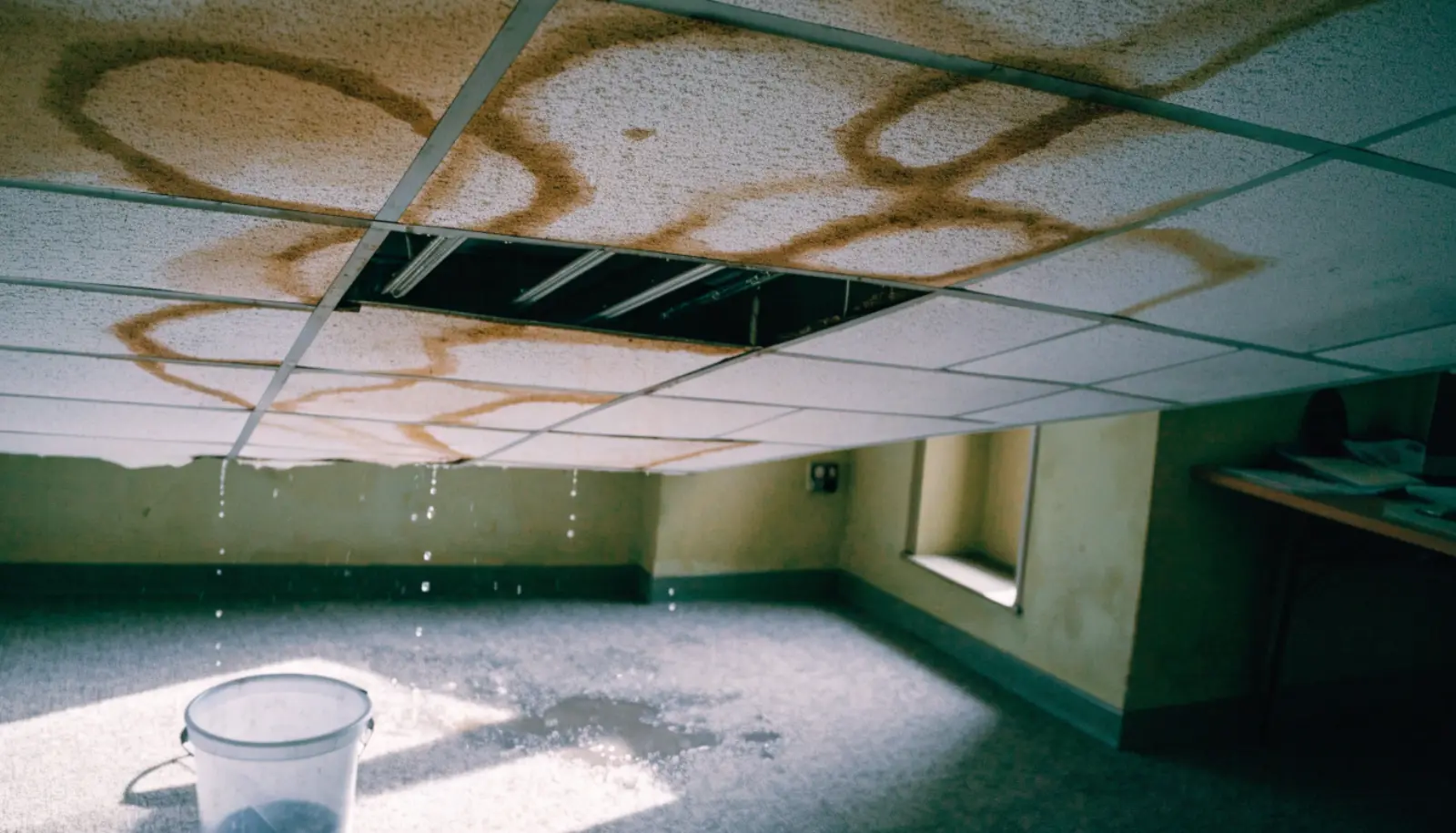
What is commercial leak detection?
Commercial leak detection is the investigation that comes before the repair. A specialist uses non-destructive tests to find where water is getting into a building, or escaping from a system inside it. They mark the source, document it, and recommend the right repair trade. It covers every part of a commercial building: roofs, walls and glass, plumbing and mechanical piping, and the structure below grade.
It matters because water on a commercial building almost never appears where it starts. Rain can enter at a rooftop curb and run along the deck before dripping thirty feet away. A pinhole in a chilled water line can soak insulation and show up as a ceiling stain on the next floor down. Groundwater can come through a cold joint and travel under flooring. Without detection, the repair goes where the stain is, and the leak keeps coming back. With detection, the first repair can be the last one.
Detection also creates a record. Written findings with photos, moisture readings and marked locations help insurers, landlords, tenants, HOA boards and contractors agree on what happened and who's responsible.
Which detection methods are used, and when?
| Method | What it finds | Best for |
|---|---|---|
| Moisture mapping | Wet areas and their highest or wettest point. | Every investigation's starting point: ceilings, walls, floors, roof insulation. |
| Infrared thermography | Temperature differences caused by water in materials. | Roof insulation surveys, wall cavities, hot water lines. |
| Acoustic listening | The sound of water escaping a pressurized pipe. | Buried water lines and under-slab supply leaks. |
| Tracer gas | Safe gas escaping from a drained pipe through soil or concrete. | Quiet leaks, plastic pipe, very small leaks. |
| Pressure & isolation tests | Which section of piping is losing pressure. | Supply, hydronic and fire lines. |
| Water & flood testing | The exact joint or detail that lets water in under controlled wetting. | Windows, curtain walls, roof details, plaza decks. |
| Electronic leak detection | Breaches in roof and deck membranes using a low- or high-voltage current. | Single-ply and fluid-applied membranes, especially covered ones. |
| Camera, smoke & dye | Cracks, offsets, roots and disconnected or cross-connected drains. | Sewer, storm and drain lines. |
Two of these have their own pages: thermal imaging and infrared thermography, and acoustic and tracer gas leak detection.
How does a leak investigation work?
Start with the pattern
The most useful evidence is often the leak's behavior. Does it happen only in rain? Only in wind from the south? Only on weekdays when the building is running? Only after the irrigation cycles? Rain-only leaks point to the envelope. Dry-weather leaks point to plumbing, mechanical or irrigation. Leaks that start a day after a storm point to groundwater.
Map the moisture
Meter readings across ceilings, walls and floors show how big the wet area is and where it's wettest. Water spreads outward and downward, so the wettest high point is the best clue to where it's coming from.
Narrow it with the right test
From there, the specialist picks the tests that fit. They might run a pressure test on a suspect line, a water test on a window, an infrared scan on the roof or a camera in the drain. Often two methods confirm each other before anyone recommends opening a wall or a floor.
Mark and report
The source is marked on site and documented with photos, readings and a plain-language summary that names the failure, the repair trade needed and any related conditions worth watching.
Detection versus repair contractors
Many roofers, plumbers and glaziers do their own diagnostics, and for straightforward leaks that works well. An independent investigation is most useful when trades disagree, when a leak has beaten several repair attempts, or when the result will be used for an insurance claim or a cost split between parties. Either way, ask the person diagnosing your leak which tests they ran and what each one showed.
When should you call for leak detection?
- The same leak has been "fixed" more than once and came back.
- Water appears far from any obvious roof, window or plumbing.
- The water bill or a makeup meter is rising with no visible leak.
- Leaks happen only in certain weather and you can't pin down why.
- You need documentation for an insurance claim or a dispute.
- Owner, tenant or HOA need to agree on the cause and responsibility.
- You're deciding between repairing and replacing a roof.
- Mold or musty odors with no visible water source.
Why are commercial leaks so hard to find?
- Water travels. Along roof decks, beams, conduit, pipe insulation and the tops of walls, often far from the entry point.
- Several leaks at once. Older buildings may have a roof leak and a plumbing leak in the same area.
- Hidden assemblies. Drop ceilings, chases, shafts and slabs hide the source.
- Intermittent conditions. Wind direction, rain intensity, equipment cycles and water use change from day to day.
- Condensation look-alikes. Sweating pipes, ducts and metal roofs drip like leaks.
What should you record before the investigation?
- Dates and times each time water appears, with the weather and any equipment running.
- Photos of each stain or wet area, with tape marks to track growth.
- Water meter and makeup meter readings, including overnight readings.
- Past repairs to the area: who did them and what they found.
- Roof warranties, as-built drawings and maintenance records if you have them.
Pro tip: don't clean it all up
Contain the water, but leave stains and wet materials in place where it's safe, until the investigator has seen them. They're evidence of where the water has been.
Warning: be wary of demolition-first quotes
If a contractor wants to open large areas of ceiling, wall or floor before testing, ask what non-destructive tests they've done to justify it.
What happens during a leak investigation?
- InterviewHistory, patterns, past repairs and building systems near the leak.
- WalkthroughInterior and exterior review of the affected area and everything above and around it.
- Moisture mappingReadings that outline the wet area and its source direction.
- Targeted testingInfrared, acoustic, tracer gas, pressure, water or camera tests as the evidence points.
- ConfirmationA second method or repeat test confirms the source where possible.
- ReportMarked location, photos, readings, the likely cause and the recommended repair trade.
What affects the cost of leak detection?
| Factor | Effect on the job |
|---|---|
| Building size | Larger affected areas take longer to map and test. |
| Methods needed | Specialized equipment such as infrared, ELD or tracer gas adds cost. |
| Access | Roofs, shafts, high ceilings and occupied spaces. |
| Conditions | Some tests need rain, sun or night-time scheduling. |
| Reporting | Detailed reports for insurance or legal use take more time. |
What if water is pouring in right now?
Stop the water and protect people first. Detection can come right after. Shut off supply valves if it's a plumbing leak, contain and divert roof water, and make wet electrical areas safe. Active water is also a chance to find the source quickly, because the trail is fresh. Call for emergency commercial leak repair and mention that you also need the source found.
Water and electricity
Keep people out of areas where water is near panels, outlets or light fixtures until power is safely off.
Commercial leak detection FAQ
Is leak detection worth paying for separately?
When a leak is obvious, a repair contractor can handle it directly. When it's recurring, hidden or disputed, separate detection usually saves money by preventing repairs in the wrong place.
Will they need to open walls or ceilings?
The goal is to avoid it. Sometimes a small inspection opening is the fastest way to confirm a finding, but it should be targeted and agreed in advance.
Can one visit find every leak?
Many leaks are found in one visit. Intermittent or weather-dependent leaks may need a return visit when conditions match, such as rain from a certain direction.
Will I get a written report?
Ask for one. A good report includes photos, readings, the marked source and recommendations, which is useful for insurers and contractors.
Can detection tell condensation from leaks?
Yes. Surface temperatures, humidity readings and the pattern of moisture usually separate condensation on cold surfaces from water coming through a leak.
Do you detect leaks in fire sprinkler systems?
Sprinkler systems are maintained by licensed fire protection contractors. If a sprinkler line is suspected, they should be involved, along with your alarm monitoring company.
Related services and areas
Large campuses in Canyon Park, with big roofs and complex mechanical systems, and condo buildings in Westhill, where owners and the HOA need agreement on the cause, both benefit from a proper investigation. Once the source is found, see how to stop a building leak in Bothell with the right repair. The most common follow-up repairs are roof leak repair and slab leak repair.