What is commercial roof leak repair?
Commercial roof leak repair means finding where water gets through a building's roof system and restoring that spot so the roof sheds water again. Most commercial roofs are low-slope. People call them flat, but they're built with a slight pitch toward drains or scuppers. The waterproofing layer is a membrane: single-ply TPO, PVC or EPDM, or multi-ply modified bitumen or built-up roofing (BUR).
A repair is not a replacement. It targets one failed detail, such as a seam, a flashing, a penetration or a drain, and leaves the rest of the roof in service. Done properly, it includes three things. The entry point is confirmed before work starts. The repair uses materials the existing membrane will actually bond to. And the insulation around the leak is checked, because wet insulation left in place keeps the leak going. When large areas are wet or the membrane is near the end of its life, the conversation shifts to restoration or replacement.
How do roofers find and fix a commercial roof leak?
The work runs from the inside out, then from the top down.
Tracing it from inside
The technician starts under the leak and looks at the ceiling, the deck, and any conduit, pipe or beam the water could be following. They also note where rooftop equipment sits overhead. On a steel deck, water often runs along the flutes before it drips, so the drip point gives a direction, not an address.
Surveying the roof
On the roof, they walk the area above and upslope of the leak and check every detail: field seams, curb flashings at rooftop units, pipe boots and pitch pans, drain clamping rings, scuppers, edge metal and the base of parapets. Moisture meters, small core cuts or an infrared roof scan show how far the water has spread into the insulation.
Testing
When the source isn't obvious, they water-test one detail at a time while someone watches inside. On single-ply membranes, electronic leak detection can locate holes in the membrane itself.
Repairing
The repair has to match the membrane. TPO and PVC get heat-welded patches. EPDM gets primed, taped or adhered patches. Modified bitumen and BUR get torched, cold-applied or hot-mopped plies. Flashings are rebuilt, not smeared with mastic, and wet insulation under the repair is cut out and replaced so it can't trap water.
What are the warning signs of a commercial roof leak?
Roof leaks are often noticed late, after water has already soaked into the insulation. Watch for these signs:
- Ceiling tile stains that darken after rain and spread outward in rings.
- Drips that start hours after the rain stops, a sign that water is moving through the insulation or along the deck.
- Water inside near rooftop units, skylights or roof hatches.
- Ponding on the roof that is still there two days after rain.
- Blisters, wrinkles, open laps or exposed scrim on the membrane surface.
- Rust on the underside of the steel deck or along bar joists.
- Musty odors or mold on the top floor, especially in corners along exterior walls.
- Heating or cooling costs rising with no change in use, because wet insulation loses much of its R-value.
What causes commercial roofs to leak?
Most roof leaks come from a short list of conditions, and the Puget Sound climate makes several of them worse.
- Flashing failures at curbs and penetrations. Every unit, vent and pipe is a hole in the membrane, sealed by flashing that moves with heat and vibration. These details usually fail first.
- Seam failure. Seams that were never fully welded or adhered open up over time, especially under standing water.
- Clogged drains and scuppers. Fir needles, leaves and moss back water up against seams and flashings that were never meant to sit underwater.
- Foot traffic and trade work. HVAC service, dropped tools and loose screws puncture membranes, usually right around rooftop equipment.
- Age and weathering. Membranes shrink, lose flexibility and crack, and coatings wear thin.
- Moss and organic growth. Western Washington's damp, mild weather lets moss and algae hold moisture against the roof surface and edge metal.
- Wind. Winter storms lift loose edge metal and peel back perimeter flashing.
Where the roof meets a wall, many "roof" leaks are really parapet and flashing problems. On a seam or field failure in the membrane itself, see flat roof patching and membrane repair.
What can you safely check before calling?
Only go onto a roof with safe access, fall protection where it's required, and someone who knows you're up there. Never go up in rain, ice or high wind.
- Inside, outline each stain with painter's tape and write the date on it, so you can tell whether it's growing.
- Note the weather each time it leaks: heavy rain, wind direction, or a dry day.
- Check whether an HVAC condensate line or plumbing runs above the stain. Not every ceiling leak is the roof.
- From a safe roof access point, look for clogged drains, debris dams and standing water.
- Look at nearby rooftop units for loose panels, missing screws, or condensate draining onto the membrane.
Pro tip: clear the drain basket
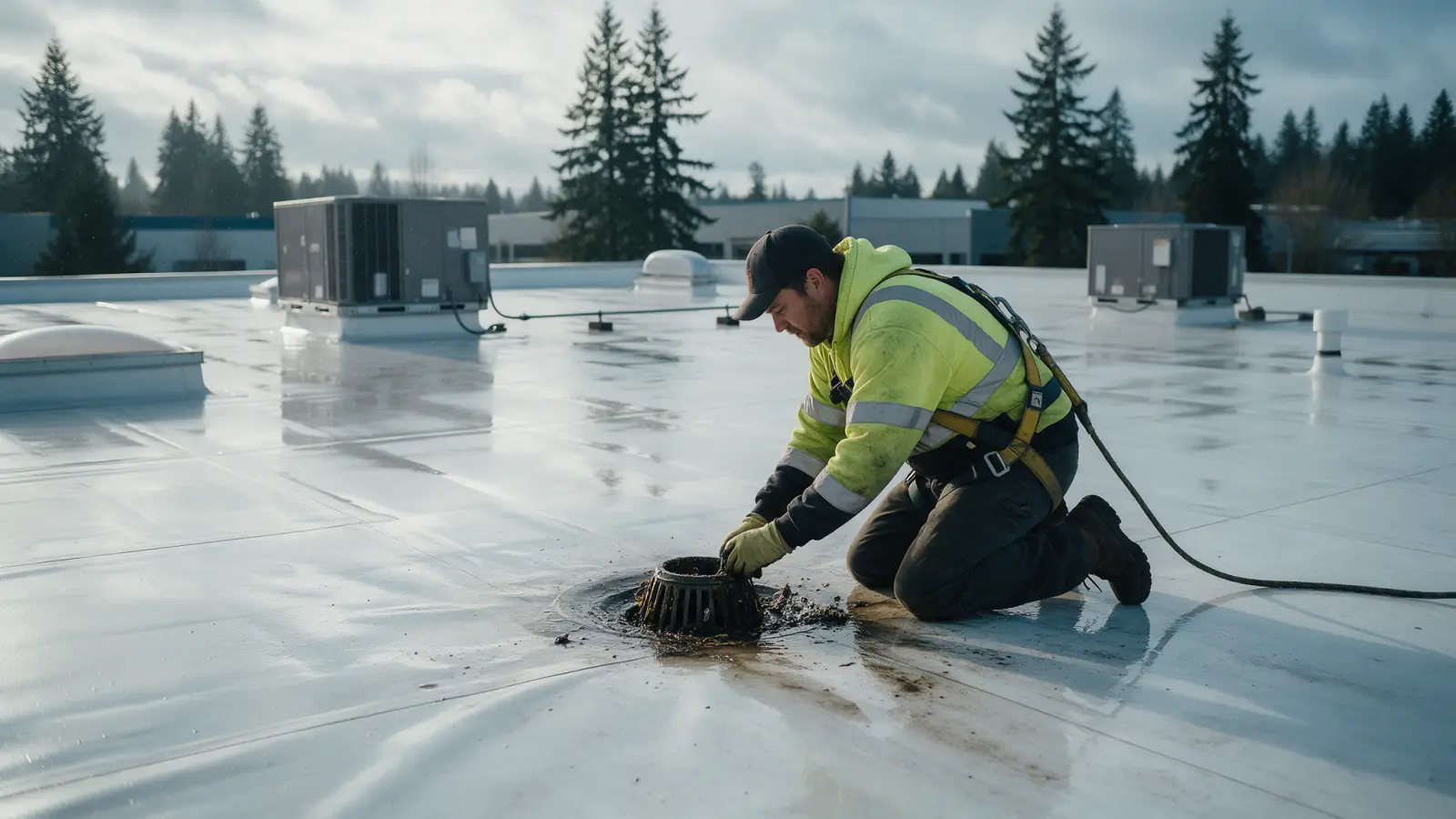
A clogged drain is one of the few roof leaks you can relieve the same day. Lift debris off the strainer by hand. Don't pry at the clamping ring or the membrane around it.
Warning: skip the caulk gun
Roofing cement or caulk smeared on a single-ply membrane often won't bond. Worse, it can contaminate the surface so a proper patch won't weld later, and it hides where the leak really is.
What happens during the roofer's visit?
- Interior reviewThe roofer looks at the stains, the deck and what sits above them. Hand over your dated leak notes and photos.
- Full roof walkThe whole roof gets surveyed, not just the spot above the stain. Suspect details are photographed and drains are checked.
- Moisture checkMeter readings or core cuts around suspect areas, or an infrared survey if the wet area might be large.
- ConfirmationA water test on the most likely detail if the source still isn't certain.
- Temporary dry-inIf the permanent repair needs dry weather or special materials, a temporary seal or cover stops the water first.
- RepairA patch or flashing rebuild matched to the membrane, with wet insulation replaced.
- Verification and reportA re-test, before-and-after photos, and notes on other details to watch at the next inspection.
What affects the cost of a commercial roof leak repair?
Pricing follows the roof, not a flat rate. These factors matter most:
| Factor | Effect on the job |
|---|---|
| Membrane type | Decides the materials, tools and whether the repair is welded, adhered or torched. |
| Roof access | Roof height, hatch or ladder access, and lift needs change setup time. |
| Failed details | One pipe boot versus several curbs and an open seam run. |
| Wet insulation | Replacing saturated board adds material and labor. |
| Warranty rules | Manufacturer-approved materials or contractors may be required. |
| Timing | Storm-night response and temporary dry-ins add a visit. |
When is a roof leak an emergency?
Treat it as an emergency when water reaches electrical panels, light fixtures or server rooms, or when it's coming in fast during a storm. Also treat it as one when a ceiling sags or bulges. That means water is pooling above it, so keep everyone out from underneath.
Visible roof deflection is a structural warning
If ponded water is making the roof sag, evacuate the area below and call emergency commercial leak repair. A crew can clear drains to relieve the load and install a temporary seal, then come back for the permanent fix.
Commercial roof leak FAQ
Can a flat roof be repaired in the rain?
Temporary repairs, yes: tarps, wet-surface emergency sealants and clearing drains. Permanent repairs on most membranes need a clean, dry surface to weld or bond. During Bothell's wet season that can mean waiting for a dry window.
Should a leaking commercial roof be repaired or replaced?
Repair it when the leaks come from a few failed details and the insulation is mostly dry. Consider restoration or replacement when leaks are widespread, the membrane is brittle or shrinking, or a moisture survey finds large wet areas. Roof coatings can be a middle path on a sound roof.
Why does the roof leak only in certain storms?
Wind direction and rain intensity both matter. A loose counterflashing or an open lap at the roof edge may only let water in when wind drives rain from one direction. A partly clogged drain may only overflow in heavy downpours.
How long does a roof leak repair take?
Most detail repairs are done in one visit once the source is confirmed. Larger patches, flashing rebuilds around big rooftop units, or insulation replacement take longer and can depend on dry weather.
Will my roof warranty cover the repair?
Some manufacturer warranties cover leaks from material or workmanship defects. Damage from foot traffic, other trades or poor maintenance usually isn't covered. If your roof is still under warranty, call the warranty holder before any work starts.
How often should a commercial roof be inspected?
Common industry guidance is at least twice a year, usually spring and fall, plus after major storms. Around Bothell, a fall inspection with drain cleaning before the rainy season is the most valuable one.
Related services and areas
Roof leaks are a constant concern on the large low-slope roofs of the Canyon Park business parks, and on the older storefront roofs along Main Street in Downtown Bothell. If you're not sure the roof is the problem at all, start with our overview of commercial leak repair in Bothell.