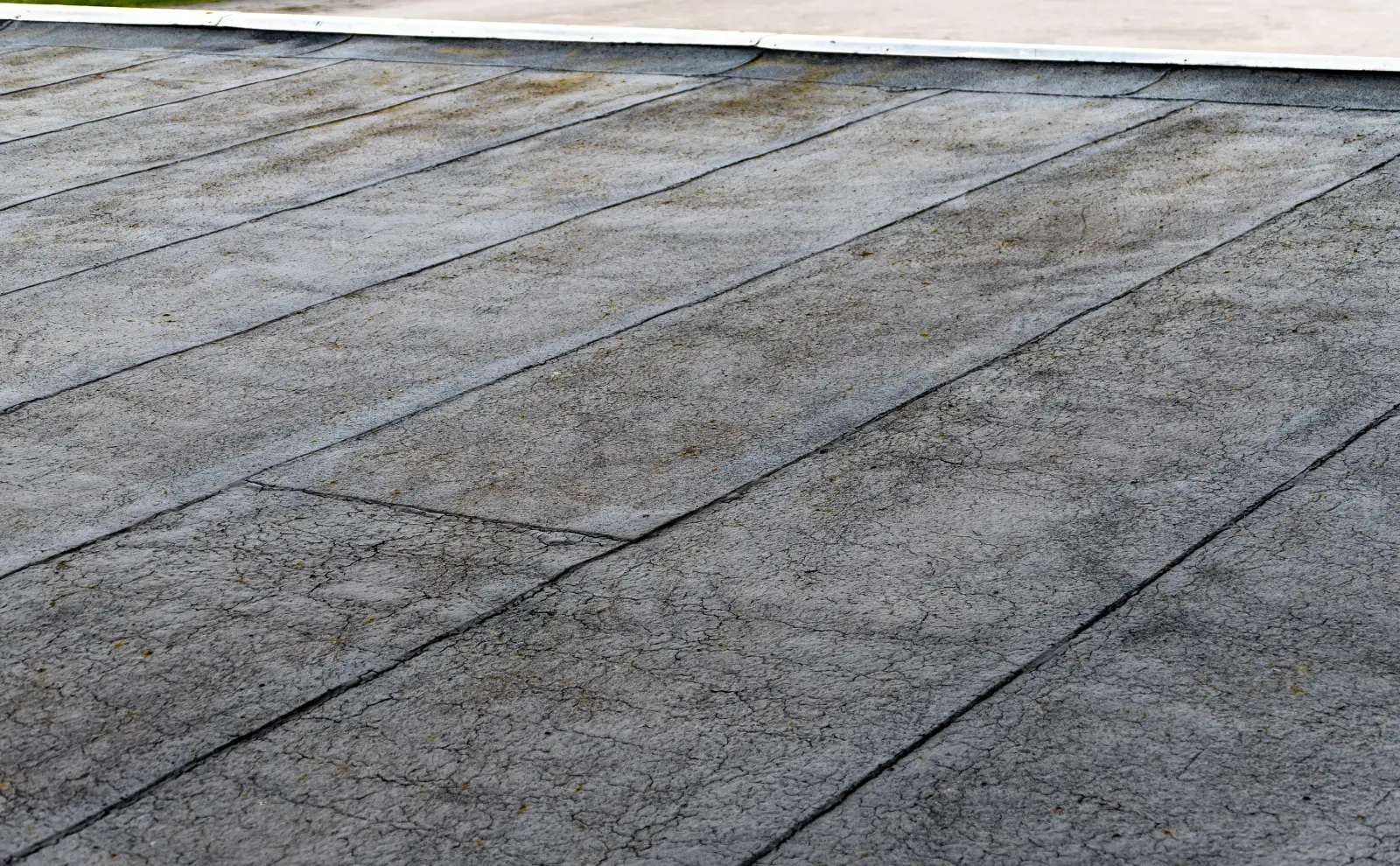
What are commercial roof coatings and waterproofing?
A roof coating is a fluid-applied membrane, rolled or sprayed over an existing roof, that cures into a seamless waterproof layer. It covers seams, fastener heads and small cracks in one continuous skin, and adds a fresh surface that reflects sunlight and takes the weathering instead of the old roof. Done on the right roof at the right time, it adds years of service life for far less disruption than a tear-off.
Commercial waterproofing is the wider family of the same idea. It includes traffic and deck coatings on balconies, plaza decks and parking levels, liquid flashings around penetrations, and below-grade membranes on foundation walls. What they share is a liquid or sheet barrier applied directly to a prepared surface, and the fact that prep and moisture conditions decide whether it lasts.
Is your roof a candidate for a coating?
A coating restores a roof. It can't rescue a failed one. Most specialists look for these conditions before recommending it:
- The deck is sound, with no sagging, rot or heavy corrosion.
- The insulation is mostly dry. Wet areas found in a moisture survey are cut out and replaced first.
- The existing membrane is still attached and not badly shrunk, split or blistered across large areas.
- Ponding is limited, or the coating chosen is rated to handle standing water.
- The coating is compatible with what's already there: single-ply, modified bitumen, BUR, metal or an older coating.
The moisture check matters most. Coating over saturated insulation seals the water in, and the roof keeps deteriorating under a new-looking surface. An infrared roof survey or a grid of moisture readings answers that before anyone buys material.
How is a roof coating system applied?
Choosing the coating
| Coating | Strengths | Watch-outs |
|---|---|---|
| Silicone | Handles ponding water and UV well. Often applied in one thick coat. | Gets dirty and slippery. Future recoats generally need silicone too. |
| Acrylic | Water-based, reflective and easy to recoat. | Not suited to long ponding. Needs dry weather and moderate temperatures to cure. |
| Polyurethane | Tough and impact-resistant, good where there's foot traffic. | Typically more prep and multiple coats, often with a separate top coat. |
Preparation
Prep is where coatings succeed or fail. The roof is cleaned, usually by pressure washing, to remove dirt, chalking, moss and loose granules. Open seams, blisters and splits are repaired. Rust on metal roofs is treated and primed. An adhesion test patch confirms the coating will bond to the existing surface.
Detailing and application
Seams, penetrations, drains and flashings get extra attention first, often with a reinforcing fabric embedded in the coating. Then the field is coated to the specified thickness, measured during application with a wet-film gauge so thin spots don't slip through.
Decks, walls and below grade
Waterproofing away from the roof follows the same logic. Plaza decks and balconies get a multi-layer traffic coating with a wear-resistant top coat and grit for footing. Foundation walls get sheet or fluid-applied membranes on the outside, with drainage board and a footing drain to take the water away. When the outside of a wall can't be reached, crystalline or other negative-side treatments are applied from inside. They resist water pressure but don't stop a wall from cracking. Every one of these systems depends on a clean, sound, properly dry substrate, just like a roof coating.
What are the signs a roof needs restoration?
- Several small leaks in different places instead of one obvious failure.
- Surface chalking, crazing or exposed reinforcement on a single-ply roof.
- Granule loss and bare, cracking spots on a modified bitumen cap sheet.
- Rusting fasteners, laps and panel edges on a metal roof.
- Seams that keep needing patches every season.
- Rising cooling costs from a dark or dirty roof surface absorbing heat.
- A roof nearing the end of its warranty term with the deck still in good shape.
- Worn, cracked traffic coating on a parking deck or plaza.
Why do roof coatings fail?
When coatings fail early, it's rarely the product. The usual causes are:
- Poor cleaning. Dirt and chalking left on the roof become the weak layer the coating peels away from.
- Coating over wet insulation. Trapped moisture causes blisters and keeps rotting the roof underneath.
- Too thin. A coat applied below the specified thickness wears through early, especially at seams and edges.
- Wrong chemistry. An acrylic on a roof that ponds for days, or a coating that isn't compatible with the old surface.
- Bad weather timing. Rain, dew or cold during curing ruins adhesion. Western Washington's long wet season leaves fewer good application days.
- Skipped detail work. Unrepaired seams and flashings keep leaking under the new coat.
What can you check before talking to a specialist?
- Gather the roof's install date, membrane type and any warranty paperwork.
- List every leak location from the past year. A spread-out pattern suggests restoration; one spot suggests a repair.
- From a safe vantage point, photograph the overall roof surface, ponding areas and the worst seams.
- Note any soft or spongy areas reported by HVAC techs or others who walk the roof.
- Plan for the season. Most coatings need a dry stretch, so many projects around Bothell are scheduled for late spring through early fall.
Pro tip: ask for the coating thickness in writing
The proposal should state the dry film thickness or the application rate, and how it will be verified. That's what you're paying for.
Warning: "paint the roof" quotes
A quote that skips cleaning, moisture testing and seam repair isn't a restoration. It's a temporary color change that can make a later repair harder.
What does a coating project look like, step by step?
- Roof assessmentA roof walk plus a moisture survey or cores to confirm the roof qualifies.
- Wet area removalSaturated insulation and membrane are cut out and replaced.
- CleaningThe surface is pressure-washed and dried, with cleaners suited to the roof type.
- Repairs and primerSeams, blisters and flashings are repaired, rust is treated, and primer goes on where the system calls for it.
- Reinforced detailsFabric and coating go on at seams, penetrations, drains and edges.
- Field coatsThe coating is applied to the specified thickness, checked as it goes, then inspected after curing.
What affects the cost of a roof coating?
| Factor | Effect on the job |
|---|---|
| Roof size & shape | Large open areas coat faster than roofs crowded with equipment. |
| Wet area replacement | Every square foot of wet insulation removed adds cost. |
| Coating type & thickness | Chemistry and specified thickness decide material quantity. |
| Prep needs | Heavy moss, rust or failing old coatings take more prep. |
| Warranty level | Longer manufacturer warranties typically require thicker systems and inspections. |
What if the roof is leaking right now?
A coating is a planned project, not an emergency fix. It needs dry weather and a prepared surface. If water is coming in today, the first step is a temporary repair at the leak, then the coating gets planned for the next dry window. For active water during a storm, call for emergency commercial leak repair.
Coated roofs can be slippery
Wet silicone and acrylic surfaces are slick. Anyone going up during or after rain needs proper footwear and fall protection.
Roof coating FAQ
How long does a roof coating last?
It depends on the chemistry, the thickness applied and the roof's exposure. Manufacturers offer warranties of different lengths tied to thickness. Many systems can be cleaned and recoated later to extend their life again.
Can a coating go on in Bothell's wet season?
Rarely well. Most coatings need a dry surface, no rain during curing and suitable temperatures. Some products tolerate cooler or damp conditions better, but most projects here are scheduled for the drier months.
Will a coating stop an active leak?
Not by itself. The leak has to be found and repaired first, and the wet insulation replaced. The coating then protects the whole roof from the next round of small failures.
Can metal roofs be coated?
Yes, once rust is treated, loose fasteners are replaced and laps are reinforced. Coatings are a common way to extend the life of sound exposed-fastener roofs.
Do coatings help with energy costs?
Light-colored, reflective coatings reduce the heat a roof absorbs in summer, which can lower cooling loads under the roof. How much depends on the building, its insulation and its use.
What about parking decks and balconies?
Those get traffic coatings built to resist wear, and sometimes de-icing salts. See parking garage and elevator pit waterproofing for deck-specific problems.
Related services and areas
Large, mostly open roofs on business-park buildings in Canyon Park are often good restoration candidates, as are aging strip-center roofs around Thrasher's Corner. If you're not yet sure what's causing your leaks, read about Bothell building leak repair first. Spot failures should go to membrane repair before any coating.