What is commercial main water line repair?
A commercial property's water service line is the buried pipe that carries water from the utility's meter to the building. In most systems, the utility is responsible for the water main in the street and the meter, and the property owner is responsible for everything past the meter. On a commercial site that line can be long. It may run under parking lots, landscaping and sidewalks, branch to several buildings, and feed irrigation and fire service connections along the way.
Main water line repair means confirming the leak is on that service line, locating it underground, and repairing or replacing the failed section. Because the line is under pressure all the time, even a modest leak can waste a lot of water, undermine paving and soak the soil next to foundations. Finding it before you dig keeps the repair small.
Many commercial properties also have a separate fire sprinkler service line. Fire lines have their own rules, inspections and specialty contractors, so tell the specialist up front if the leak could be on the fire service.
How are service line leaks found and repaired?
Confirm and isolate
The first step is confirming water is being lost between the meter and the building. With the building's main valve closed and nothing running, a moving meter means a leak on the service line or a branch off it. Closing irrigation and other branch valves narrows it further.
Locate the pipe, then the leak
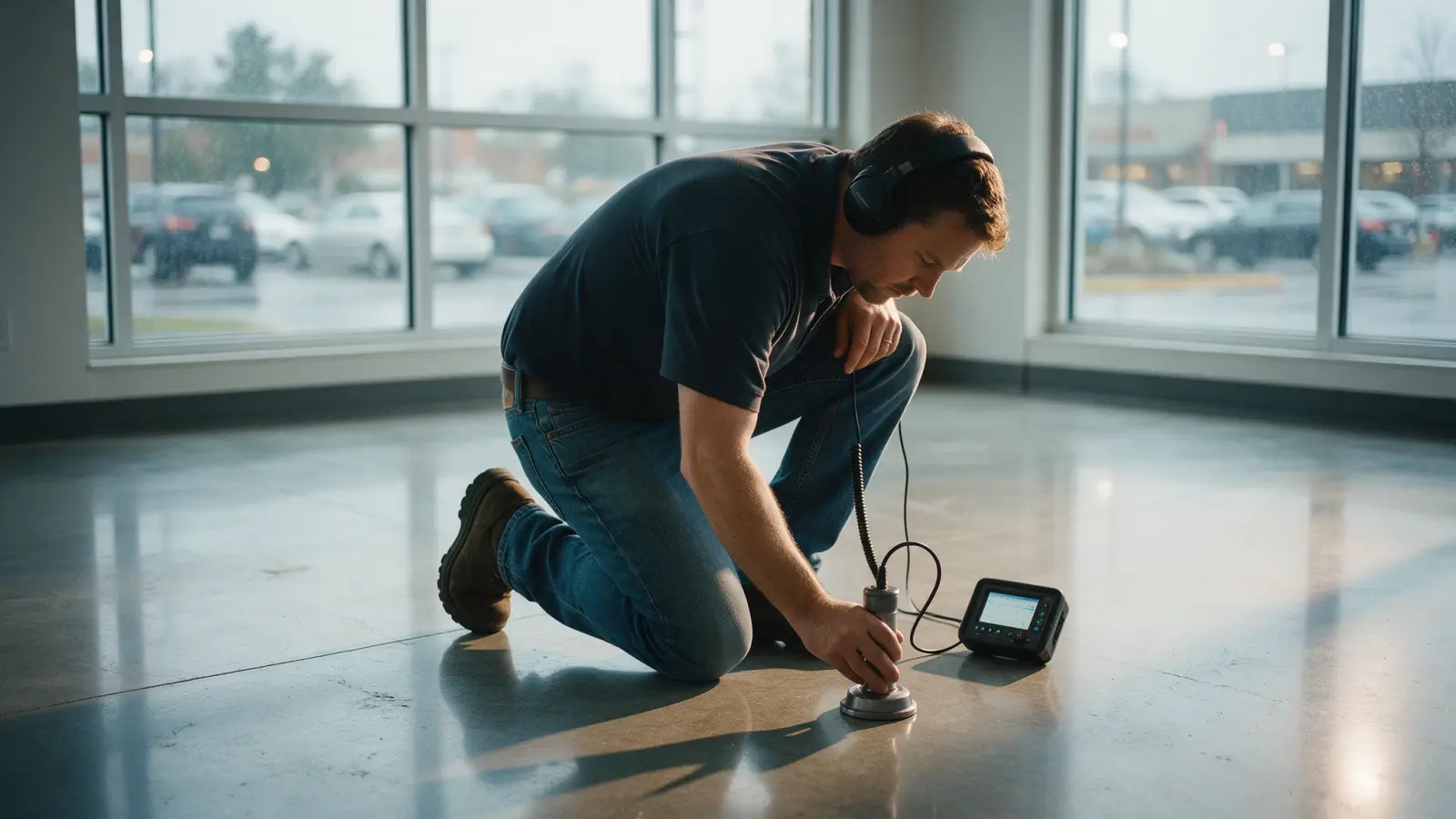
The line's route is traced with an electronic locator or a tracer wire, if one was installed. The leak is then pinpointed with acoustic or tracer gas detection. Ground microphones listen for the sound of water escaping, and correlators compare that sound from two contact points on the pipe to calculate where along the line the leak sits. Plastic lines carry sound poorly, so tracer gas is often the better tool on them.
Call before you dig
Before any excavation, other buried utilities must be marked. In Washington that starts with a locate request through the 811 one-call system, and private utilities on the property may need a private locator as well.
Repair options
- Spot repair. A small excavation at the leak, with the damaged section cut out and replaced or clamped. Best when the rest of the line is sound.
- Section replacement. Replacing a longer run where the pipe is corroded or has failed more than once.
- Directional boring. Running a new line underground between two small pits, so parking lots and landscaping stay intact.
- Pipe bursting. Pulling new pipe through the old one, breaking it outward as it goes, where conditions allow.
After any repair, the line is flushed, pressure-tested and, where required, disinfected and tested before it goes back into service. Testable backflow prevention assemblies on the line are reinstalled and retested.
Irrigation and branch lines
On many commercial sites, the biggest "main line" leak turns out to be on an irrigation branch. A cracked lateral, a broken sprinkler head or a stuck valve can run all night where nobody sees it, especially in landscaped areas with bark or ground cover. Irrigation is usually fed through its own backflow assembly and valve. Shutting that valve during a meter test quickly tells you whether the loss is on the irrigation side or the building service. If it's irrigation, a landscape irrigation contractor can often fix it faster and cheaper than a full line excavation.
What are the warning signs of a main water line leak?
- A water bill that climbs month over month with no change in use.
- The meter moving with the building's main valve closed.
- A soggy area in lawn or landscaping that stays wet in dry weather.
- Sinking, cracking or wet pavement along the line's route.
- Water seeping up through pavement joints or around the meter box.
- Lower water pressure at fixtures throughout the building.
- Sputtering faucets or discolored water after a pressure drop.
- Unusually green, fast-growing vegetation along one line through the site.
What causes commercial water service lines to fail?
- Age and material. Older galvanized steel corrodes from inside, older plastic can become brittle, and some older lines use materials no longer installed today.
- Corrosion. Metallic pipe in wet, aggressive soils corrodes from outside, especially without proper bedding or coating.
- Ground movement and traffic. Settlement, heavy truck loads over shallow pipe and seismic movement stress joints.
- Construction damage. Landscaping, sign footings, fence posts and utility work can nick or crush lines.
- Pressure surges. Water hammer from fast-closing valves or irrigation systems strains fittings.
- Tree roots. Roots can wrap and shift pipe, though they more commonly invade sewer lines.
What can you check before calling?
- Close the building's main shutoff and watch the meter for several minutes. If it moves, the leak is likely outside.
- Shut off irrigation at its own valve and check again to rule out the sprinkler system.
- Walk the likely line route between the meter and the building, looking for wet spots and sinking pavement.
- Pull water bills for the past year to see when usage changed.
- Find any site plans that show the water service and fire line routes.
Pro tip: know your shutoffs
Make sure staff know where the building main valve is and that it actually turns. Old valves that won't close turn small leaks into big ones.
Warning: don't dig without locates
Gas, electrical and communication lines often share the route with water service. Never excavate before utilities are marked.
What happens during the specialist's visit?
- Meter testsConfirm the leak and isolate building, irrigation and branch lines.
- Line locatingTrace and mark the service line route across the site.
- Leak pinpointingAcoustic listening, correlation or tracer gas narrows the leak down.
- Locates and planUtility locates are requested, and the repair method is chosen around paving, landscaping and access.
- RepairExcavation, replacement or boring, with temporary water arranged if a long shutdown is needed.
- Testing and restorationThe line is pressure-tested and flushed, and the surface restored or temporarily patched.
What affects the cost of main water line repair?
| Factor | Effect on the job |
|---|---|
| Depth & surface | Digging through asphalt or concrete costs more than soil. |
| Pipe size & material | Larger pipe and specialty fittings increase material and labor. |
| Repair vs replace | A spot repair is smaller than replacing a corroded run. |
| Shutdown needs | After-hours work or temporary water for occupied buildings. |
| Permits & testing | Right-of-way permits, backflow retests and disinfection. |
When is a water main leak an emergency?
A broken service line flooding a parking lot, water undermining pavement or foundations, or a complete loss of water to an occupied building all need immediate attention. Close the building main or the meter's curb stop if you can safely reach it, and call the water utility if the leak is on their side of the meter. For your side, call for emergency commercial leak repair.
Washouts and sinkholes
A large leak can hollow out the soil under pavement. Barricade any sinking or cracked area where vehicles or people could fall through.
Main water line FAQ
Who is responsible for the water line, me or the utility?
In most systems, the utility owns the main and the meter, and the property owner owns the line from the meter to the building. Check with your water provider, because arrangements can differ.
Can the line be replaced without tearing up the parking lot?
Often, yes. Directional boring or pipe bursting can install new pipe between small access pits and leave most of the paving in place.
Do I need a backflow test after the repair?
If a testable backflow assembly was removed, replaced or disturbed, it generally needs testing by a certified tester before it goes back in service. Washington also requires regular testing of these assemblies.
How long will the water be off?
Spot repairs are often done in a few hours. Longer replacements can be planned after hours or with temporary water to keep the building running.
Can I get a credit on my water bill?
Some water providers offer leak adjustments once a repair is documented. Keep the invoice and photos, and ask your provider about their policy.
What if the leak is inside the building?
If the meter stops when the building main is closed, the leak is inside, possibly under the floor. See slab leak detection and repair.
Related services and areas
Properties with long private service lines, like HOA communities and clubhouses in Brickyard Road–Queensgate and hillside sites on Norway Hill, are where buried line leaks often go unnoticed for months. For other kinds of leaks, see our leak specialists serving Bothell. Sewer problems on the same site are covered under sewer and drain line leak repair.