What is industrial and factory leak repair?
Industrial buildings leak for the same basic reasons as any commercial building. The scale changes everything else. A warehouse or plant may have acres of low-slope or metal roof, hundreds of skylights and smoke vents, concrete tilt-up walls with long sealant joints between every panel, loading docks with trench drains, and process, utility and fire water lines running across high-bay ceilings and under production floors. A single drip can land on inventory, packaged product, electrical equipment or a production line.
Industrial leak repair finds and fixes those leaks with the tools that big buildings need. That includes roof moisture surveys over large areas, lifts and safe access at height, utility tracing across a site, and repair crews that can work in stages around shifts, deliveries and safety rules. It also means thinking about operations: what has to be protected or moved, which lines can be shut down and when, and how to keep the facility running while the work gets done.
Lab and life-science buildings add their own wrinkles: purified water lines, process cooling, sensitive equipment and controlled spaces where leaks and repairs have to be handled with extra care.
Where do industrial buildings usually leak?
| Zone | What fails |
|---|---|
| Large low-slope roofs | Seams, curbs around equipment, drains overwhelmed in heavy rain, ponding over deflected areas. |
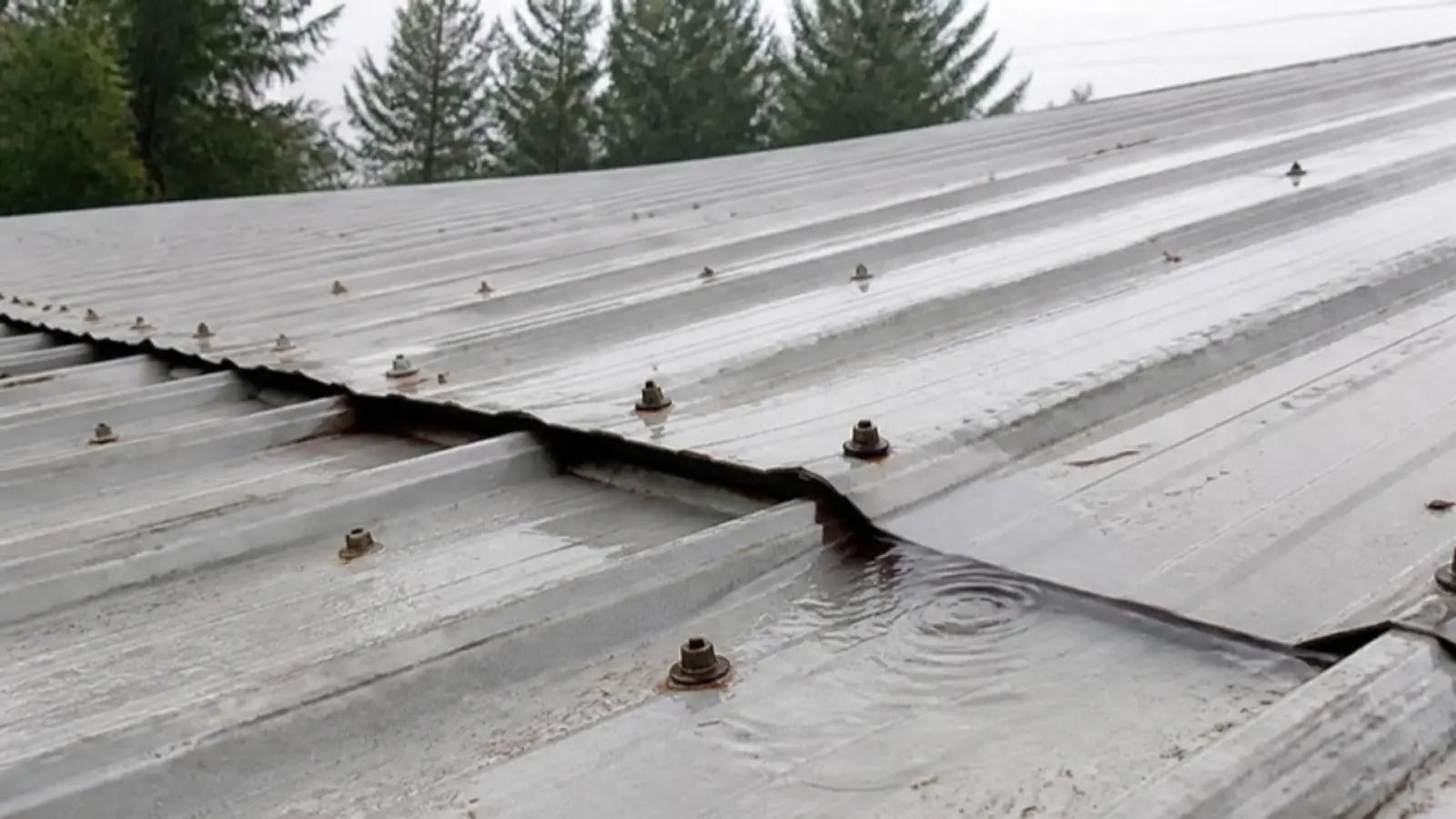
| Metal roofs | Fasteners, end laps, ridge caps and add-on penetrations. |
| Skylights & smoke vents | Curb flashing, cracked domes or panels, failed gaskets. |
| Tilt-up panel joints | Aged sealant between concrete panels, especially on the weather side. |
| Loading docks | Trench and dock drains clogged or undersized, door seals, slab joints at the dock edge. |
| Process & utility lines | Corroded or vibrating lines, leaking valves and couplings, buried supply mains. |
How are industrial leaks found and repaired?
Map before you fix
On large roofs, the first step is often a full moisture survey with infrared thermography or grid moisture readings. That shows where water has spread and where the roof is still dry. Interior leak points are mapped against the roof plan, so repair crews go straight to the likely sources instead of walking acres of roof looking for them.
Roof and skylight repairs
Typical roof work includes rebuilding curb flashings at units and skylights, repairing seams, replacing fasteners on metal roofs, and adding crickets or tapered insulation where water ponds against equipment. Damaged skylight domes and panels are replaced, and fall protection screens are added where they're missing.
Walls and docks
Tilt-up joints are cut out and resealed with backer rod and sealant sized for the joint's movement. Dock trench drains are cleaned, their outlets cleared, and grates and frames repaired. Slab joints where the floor meets the dock are sealed against water tracked in from trucks.
Process and utility piping
Leaks on process water, cooling and utility lines are isolated and repaired with matching materials. Buried mains are pinpointed with acoustic and tracer gas detection before any digging. Lines feeding critical equipment are scheduled for planned shutdowns whenever possible.
Working around operations
Work is phased by area. Racking and inventory below are protected with drip diverters and plastic, lifts are coordinated with forklift traffic, and noisy or dusty work is scheduled around production. A clear daily plan agreed with the facility manager keeps the job safe and the building productive.
Labs and controlled spaces
Lab and life-science buildings bring extra systems into the picture: purified water loops, process cooling for instruments, emergency eyewash and shower lines, and roofs crowded with exhaust fans and air handlers. Leaks over controlled spaces can't be handled by simply pulling ceiling tiles. Work may need containment, cleaning protocols, and coordination with the facility's environmental health and safety team. Specialists plan access and protection with the facility team before any ceiling is opened, and they match pipe materials so a repair doesn't contaminate high-purity lines.
Plan the big roof, not just the next leak
On industrial roofs, a few patterns repeat: the same curbs leak, the same drains clog, the same areas pond. A multi-year plan built from a moisture survey, with repairs, coatings and section replacements scheduled by priority, usually costs less than reacting to every storm.
What are the warning signs of industrial leaks?
- Drips onto racking, product or equipment after rain.
- Dark, damp streaks along tilt-up panel joints inside the building.
- Water around skylights or smoke vents.
- Dock areas flooding during heavy rain.
- Rust on roof deck, joists or purlins visible from below.
- Rising water use that doesn't match production.
- Ponding visible on the roof from upper floors or adjacent buildings.
- Wet floors near equipment with no spill to explain them.
What causes leaks in industrial buildings?
- Roof size and equipment. Large roofs collect enormous volumes of water, and every unit, fan and vent is a penetration.
- Deferred roof maintenance. Big roofs are often inspected rarely, so small failures grow.
- Sealant aging. Tilt-up joints and skylight seals age out together, often all at once.
- Vibration and heat. Production equipment and process lines loosen connections over time.
- Heavy traffic. Trucks and forklifts damage dock drains, slab joints and door seals.
- Condensation. Unheated or partially heated warehouses can sweat under metal decks and roofs during damp weather, which looks like leaking.
What can facility teams check safely?
- Map every leak point on a floor plan with the date, weather and what was underneath.
- Check roof drains, overflow scuppers and dock drains before the wet season.
- Look for daylight around skylights and along panel joints from inside.
- Track the main water meter against production and shift schedules.
- List which areas and lines can be shut down, and when, for repairs.
Pro tip: build a roof plan with leak history
A simple roof plan marked with every leak, repair and equipment location turns each future call into a short, targeted visit.
Warning: skylights are a fall hazard
Skylights and smoke vents won't support a person. Anyone on the roof needs fall protection or screens over openings.
What happens during an industrial leak visit?
- Operations briefingShifts, safety rules, lift access and the areas to protect.
- Leak mappingInterior leak points are matched to the roof, walls and piping above.
- SurveyRoof walk, moisture survey or utility tracing, depending on the source.
- Prioritized planRepairs ranked by risk to people, product and equipment.
- Phased repairsWork by zone, with protection set up below each area first.
- VerificationRe-testing, photos and an updated roof or leak plan.
What affects the cost of industrial leak repair?
| Factor | Effect on the job |
|---|---|
| Scale | Square footage of roof, wall joints or piping involved. |
| Access at height | Lifts, scaffolds and fall protection for high bays and roofs. |
| Operations | Night or weekend work and phasing around production. |
| Protection | Covering or moving inventory and equipment. |
| Survey scope | Whole-roof moisture surveys versus spot checks. |
When is an industrial leak an emergency?
Water on electrical equipment, control panels or production lines, a flooded dock, a burst process or utility line, or a roof sagging under ponded water all need immediate action. De-energize affected equipment safely, follow your lockout procedures, clear people from the area and call for emergency commercial leak repair.
Roof deflection over high bays
Large roofs can hold a lot of water when drains clog. Visible sagging is a structural warning. Clear the area below immediately.
Industrial leak FAQ
Can repairs happen without shutting down production?
Usually. Roof and wall repairs are phased by area, and interior work is scheduled around shifts. Process line repairs may need a short planned shutdown.
Should we survey the whole roof or just fix leaks?
For large roofs with recurring leaks, a full survey usually pays off by targeting repairs and showing whether restoration or replacement is coming.
Why do our panel joints leak?
Tilt-up joint sealant ages out over time, especially on the walls facing prevailing weather. Cutting out and replacing the sealant with the right joint design fixes it.
Is the dripping in our warehouse condensation?
It can be, especially under metal roofs in damp, cool weather. Drips on dry days with no rain point to condensation, and ventilation or insulation fixes help.
Can you find leaks in underground plant water lines?
Yes. Acoustic correlation and tracer gas pinpoint leaks on buried lines, so excavation can be small and targeted.
Do you handle fire sprinkler leaks?
Sprinkler systems are serviced by licensed fire protection contractors. Leak specialists can help locate a buried fire line leak in coordination with them.
Related services and areas
Light-industrial, lab and warehouse buildings in Canyon Park and business-park facilities around North Creek make up most of Bothell's industrial space. Roof-specific problems are covered under metal roof leak repair and commercial roof leak repair. For an overview of all services, see Bothell facility leak repair.