What is infrared thermography for leak detection?
Infrared thermography uses a thermal camera to show surface temperature as an image. It doesn't see water directly, and it doesn't see through walls. What it sees is the effect water has on temperature. Wet materials hold heat longer than dry ones, and evaporating water cools a surface. So when conditions are right, wet roof insulation, damp wall cavities and leaking hot water lines show up as distinct warm or cool patterns.
For commercial buildings, the biggest use is the roof moisture survey: scanning an entire low-slope roof to find areas where water has soaked into the insulation under the membrane. The same tools help find damp areas behind interior finishes, trace hot water lines in floors, and reveal where outside air is leaking into the building envelope.
Thermography is a screening tool. A good thermographer marks suspect areas, then confirms them with moisture meters or small core samples before anyone recommends a repair. The camera narrows the search, and physical verification proves it.
When does infrared leak detection work best?
Infrared only works when there's a temperature difference to read. Planning around conditions is the difference between a clear survey and a useless one.
| Application | Good conditions | Poor conditions |
|---|---|---|
| Roof surveys | The evening after a clear, sunny day. Dry roof surface, light wind. | Overcast all day, wet surface, standing water, strong wind. |
| Walls and ceilings | A steady indoor–outdoor temperature difference, often in heating season. | Mild days with little temperature difference. Direct sun on the wall. |
| Hot water lines | Hot water running steadily through the line for a while before scanning. | Line off or cold. Thick floor coverings that spread the heat. |
In the Puget Sound area, the long cloudy season limits good roof survey nights. Drier months usually give the best results. Wall scans, on the other hand, often work well in cooler months, when heating creates a strong temperature difference across the wall.
How is an infrared roof survey done?
Planning
The thermographer checks the roof type, layout, weather forecast and safe access. Industry guidance such as ASTM C1153, the standard practice for locating wet insulation in roofing with infrared, lays out the conditions and procedure.
Scanning
After sunset, the thermographer walks the roof with a handheld camera, or flies a drone with a thermal camera on larger roofs, looking for warm areas that match how wet insulation typically appears. Patterns are photographed and their outlines marked on the roof with paint.
Verification
The next day, marked areas are checked with moisture meters or small core cuts, which are then patched. Cores confirm whether an anomaly is wet insulation, or something else such as extra adhesive, different insulation or a patched area.
Reporting
The result is a roof plan showing wet areas, with thermal and visible-light photos and core results. It's the basis for repair scopes, insulation replacement, coating decisions and roof replacement budgets.
Inside the building
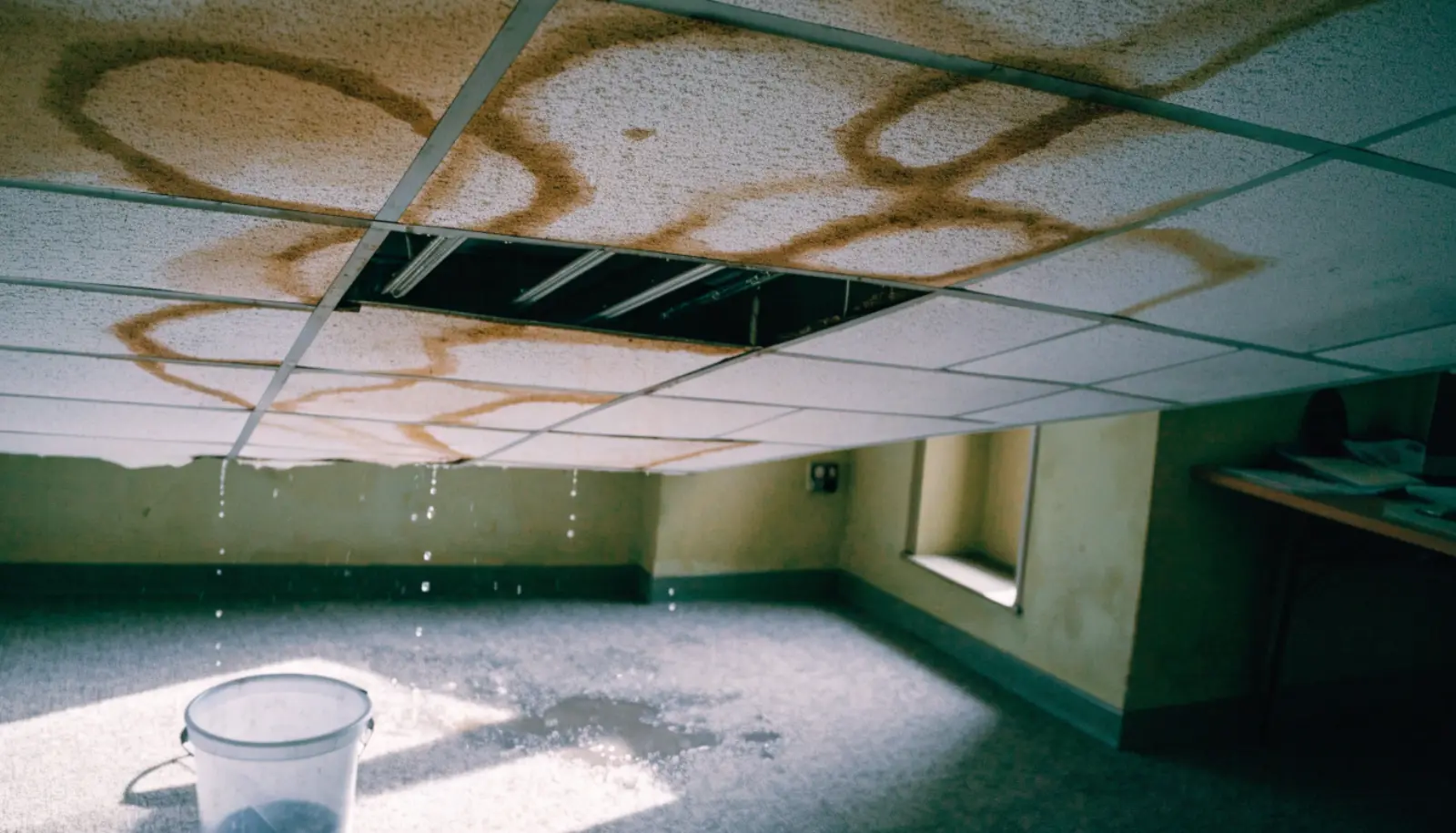
Indoors, a thermographer scans ceilings, exterior walls and floors around a reported leak. Damp drywall and ceiling tiles usually read cooler than their surroundings because of evaporation. Every suspect spot is checked with a moisture meter. On exterior walls, the same scan can also show missing insulation and air leaks around windows and floor lines, which helps explain condensation complaints that look like leaks.
Other roof moisture survey methods
Infrared isn't the only way to survey a roof. Capacitance (impedance) meters are rolled across the roof in a grid and read moisture directly below the surface. Nuclear moisture gauges measure hydrogen in the roof assembly at grid points. Electronic leak detection finds actual breaches in a membrane rather than wet insulation. The right choice depends on the roof type, its surfacing and what question you need answered.
When should you consider an infrared survey?
- Recurring roof leaks with no obvious failure at the surface.
- Deciding between repair, coating and full replacement.
- Before a coating, to confirm the insulation is dry enough.
- Buying or leasing a building with an aging roof.
- After a major storm or a long ponding event.
- Damp smells or stains in walls with no visible source.
- Warm spots on floors that could be hot water line leaks.
- Rising energy bills from wet or missing insulation.
What can thermography show, and what can't it?
Thermography is powerful but not magic. Knowing its limits avoids bad decisions.
- It shows surface temperature only. Deep moisture with little surface effect may not show.
- Surfaces affect readings. Shiny metal and some reflective coatings reflect heat and give misleading images.
- Ballast and gravel can hide patterns. Heavy surfacing on some roofs evens out temperatures.
- Not every warm spot is water. Insulation changes, extra adhesive, equipment and patches can look similar, which is why cores verify.
- It doesn't find the hole. A survey shows where water has spread. Finding the entry point may still need a roof inspection or a water test.
How can you prepare for a survey?
- Provide a roof plan or aerial image showing the roof sections, if you have one.
- Arrange safe after-hours roof access and lighting, and tell security about evening work.
- Share known leak locations and past repair areas.
- Keep rooftop work off the schedule the day of the survey so the roof stays undisturbed.
- For wall or floor scans, keep heating or hot water running normally beforehand.
Pro tip: survey before you budget
A survey before replacement planning can show whether you need a full tear-off or just wet-area replacement plus a coating, which is often a big difference in cost.
Warning: an image alone isn't a diagnosis
Be cautious of reports that show thermal images without core or meter verification. Anomalies need confirmation before they drive major spending.
What happens during an infrared survey?
- Scope and schedulingAreas, roof type, access and a weather window are agreed.
- Daytime walkA visual roof check notes surface conditions, repairs and equipment.
- Evening scanThermal imaging of the whole survey area, with anomalies marked.
- VerificationMoisture meter readings and core samples at representative anomalies.
- PatchingCore holes are sealed per the roof system's requirements.
- ReportA marked plan, thermal images, core results and recommendations.
What affects the cost of an infrared survey?
| Factor | Effect on the job |
|---|---|
| Area | Larger roofs take more scanning and marking time. |
| Method | Walking surveys versus drone thermography. |
| Verification | Number of cores and moisture readings. |
| Scheduling | Evening work and weather-dependent return trips. |
| Reporting | Detailed marked plans for design or insurance use. |
Can thermal imaging help during an active leak?
Yes, inside the building. A thermal camera can quickly show how far water has spread across ceilings and walls during or right after a leak, which helps target drying and removal. It won't stop the water, though. For active water coming through a roof or from a burst pipe, call for emergency commercial leak repair first, and ask for moisture mapping once the water is stopped.
Night roof work needs extra care
Evening surveys happen in low light. Edges, skylights and openings must be identified, protected and lit before scanning starts.
Infrared thermography FAQ
Can thermal cameras see through walls?
No. They show surface temperatures. Water behind a wall shows up only if it changes the surface temperature enough to see.
Why do roof surveys happen at night?
During the day the sun heats the roof. After sunset, dry areas cool quickly while wet insulation holds heat longer, so wet areas stand out.
Are drone thermal surveys as good as walking surveys?
Drones cover large roofs quickly and give a useful overview. Walking surveys allow closer inspection and on-the-spot marking. Many surveys combine both, and either way, verification is still needed.
Does every roof type work with infrared?
Most low-slope roofs with insulation above the deck can be surveyed. Heavy ballast and some reflective surfaces make it harder. Other methods, such as electronic leak detection or a nuclear moisture survey, may suit those better.
Can infrared find hot water slab leaks?
Often, yes. With hot water running, a warm trail or hot spot on the floor can show the line and the leak area, which is then confirmed by other methods.
Who should do the survey?
Look for a thermographer with formal infrared training and roofing experience, who verifies findings and provides a clear marked plan.
Related services and areas
Big, open roofs on business-park buildings in Canyon Park and older strip-center roofs around Thrasher's Corner are where infrared surveys most often shape repair-versus-replace decisions. Survey results feed into roof leak repair and roof coating plans. For the full picture, visit the Bothell Leak Pros home page.