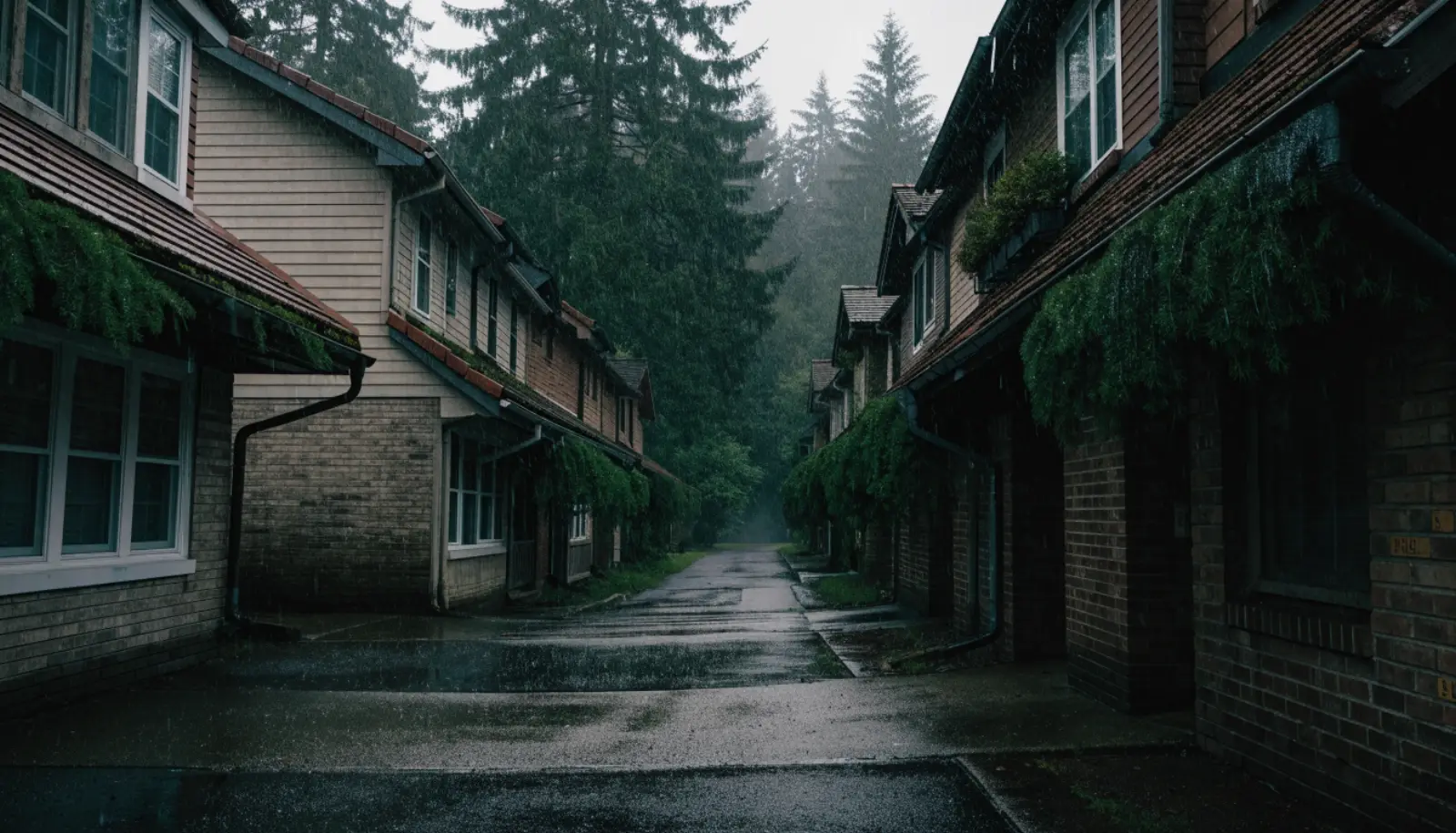
A hillside area of homes, HOA communities and community buildings, where steep lots send groundwater toward foundations and long service lines can leak unnoticed. Get connected with a local specialist who knows how water moves on a slope.
Hillside townhomes with gutters full of fir needles under tall evergreens.
Norway Hill is a hillside neighborhood on the King County side of Bothell, made up mostly of homes and HOA communities, along with the kinds of community buildings found in residential areas, such as places of worship, schools, clubhouses and small offices. Lots are often steep, driveways and private utility runs are long, and many buildings are cut into the slope with lower levels partly below grade.
On a hill, water is always moving. During the long Puget Sound wet season, rain soaks into the upper slope and travels through the soil toward whatever is downhill: foundation walls, retaining walls, lower-level rooms and garages. Dense glacial soils, common across the region, slow that water down and can let it collect against walls instead of draining away. Leaks often show up a day or two after a storm, and they can keep going for days after the rain stops.
Hillside properties also tend to have long private water service lines and drainage systems, such as footing drains, curtain drains, catch basins and retaining wall weeps. Every one of them needs to keep working for the building to stay dry. A buried water line that leaks on a slope can also add water to soil that's already saturated, which is why a dry-weather leak on a hill deserves quick attention.
Real-world example
What a typical Norway Hill leak call looks like
An HOA manager reports water seeping across the floor of a community building's lower level, partly below grade on its uphill side. It started during a long wet stretch and hasn't stopped. The specialist finds the perimeter footing drain outlet buried under landscaping at the bottom of the slope. With nowhere to go, the drain backs up and water pushes through the wall's cold joint. Uncovering and clearing the outlet, adding a cleanout, and injecting the joint stops the seepage. The board adds the outlet to the fall maintenance list so it doesn't get buried again.
Pro tip for hillside properties
Find and mark every drain outlet on the property, including footing drains, downspout lines and retaining wall drains. A buried or crushed outlet is one of the most common hidden causes of hillside leaks.
Retaining walls and slopes
Retaining walls hold back soil and the water in it. Their weep holes and drains let water out so pressure doesn't build. When weeps clog, water backs up behind the wall and finds its way into nearby structures, or puts extra load on the wall itself. Bulging, leaning or newly cracked retaining walls, or soil movement on a slope, are a job for a geotechnical or structural engineer, not just leak repair.
Top services on Norway Hill
Which leak services do Norway Hill properties need most?
Four services that match hillside HOAs and community buildings.
Concrete & foundation leak repair
Uphill walls and lower levels take the brunt of hillside groundwater. Foundation leak repair pairs crack and joint sealing with drainage fixes so water pressure drops.
Long private service lines up and down slopes can leak for months. Main water line repair confirms the loss at the meter and repairs it with minimal digging.
Community buildings, clubhouses and offices under tall trees deal with clogged drains and moss. Roof leak repair finds the real entry point instead of patching above the stain.
Locate and clear every drain outlet before the wet season.
Make sure downspouts carry water well away from foundations, especially on the uphill side.
Look at retaining walls for clogged weeps, bulging or new cracks.
Watch the water meter monthly for slow, steady increases.
Clear gutters and roof drains after needles and leaves fall.
Note how long after rain any lower-level dampness appears.
Test sump pumps on lower levels and keep their discharge away from the building.
Photograph lower-level walls each fall, so new cracks or staining are easy to spot by comparison.
Nearby
Which nearby areas do we also cover?
Norway Hill's HOA communities have a lot in common with Brickyard Road–Queensgate, and the hillside drainage issues here look a lot like those in Westhill. For commercial buildings anywhere in the city, our local commercial leak pros can help.
Why does our lower level stay wet for days after rain?
On a slope, groundwater keeps draining toward buildings long after the rain ends. If drains are blocked, it presses against walls until the soil dries out.
Can a footing drain be repaired without excavating?
Sometimes. Clearing and camera-inspecting the drain from its outlet or a cleanout can restore flow. Crushed or root-filled sections may need excavation or replacement.
Should we worry about a leaning retaining wall?
Yes. Leaning, bulging or new cracks call for an engineer's evaluation. Water behind the wall is often part of the problem.
Could a water line leak make the hillside wetter?
It can. A leaking buried line adds water to soil that may already be saturated, so dry-weather wet spots or a rising bill should be checked promptly.
Is a damp lower level always a foundation problem?
Not always. Condensation on cool below-grade walls, a plumbing leak or a blocked floor drain can look similar. Moisture readings and the timing of the dampness help tell them apart.
Do you serve community buildings as well as HOAs?
Yes. Places of worship, schools, clubhouses and small offices call about roof, plumbing and below-grade leaks.
Norway Hill leak?
Get the hillside leak traced and fixed
Call and describe the property, the building and how the leak behaves in rain.