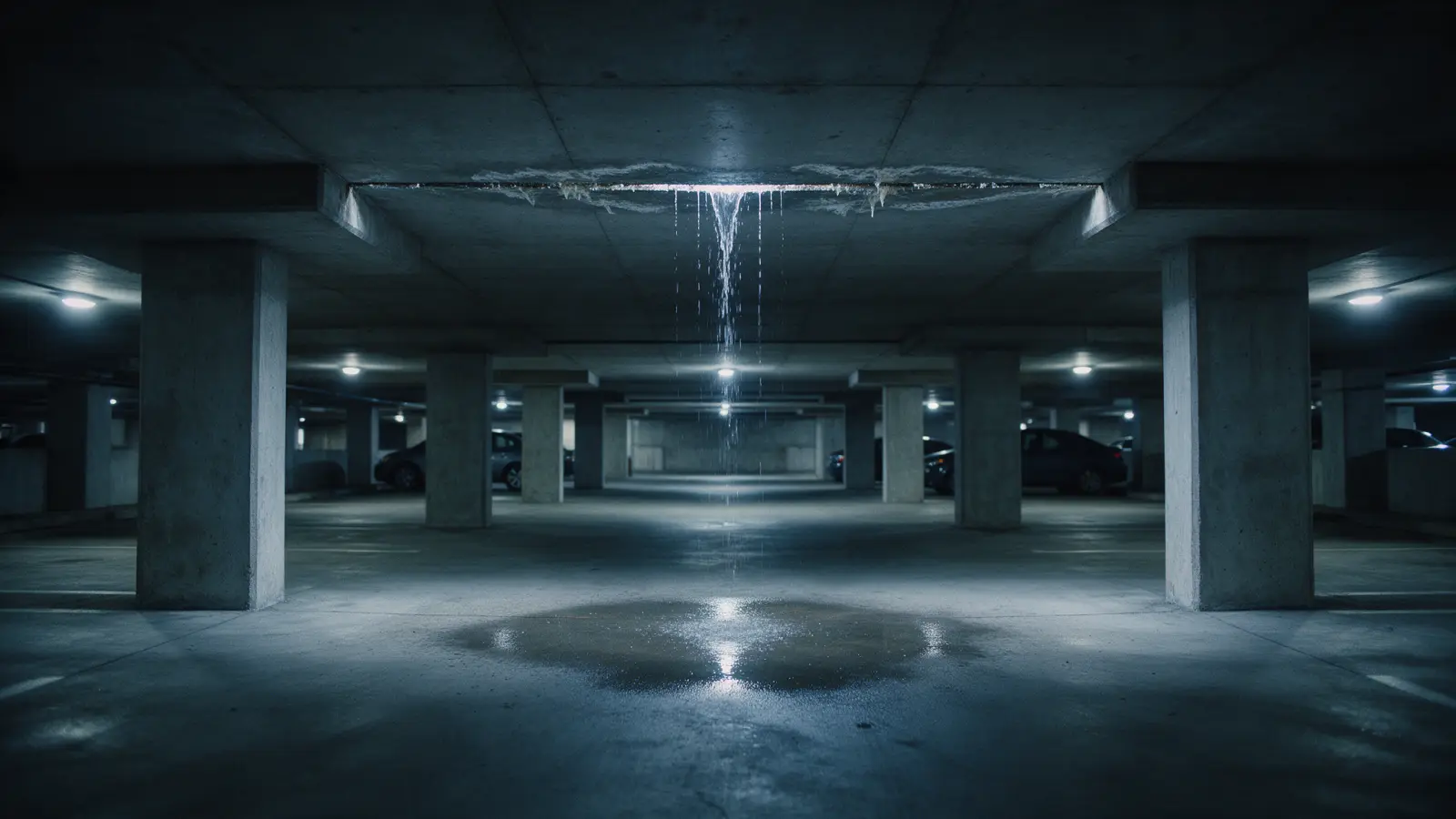
What is parking garage and elevator pit waterproofing?
Parking structures take a beating that few other parts of a building see. Vehicles bring in rain, grit and road salt. Concrete decks flex under traffic and temperature swings. Many garages sit under apartments, offices or plazas, so every leak through the deck lands on a car or into occupied space. Parking garage waterproofing keeps water out of the structural slab and away from whatever sits below it.
The work covers the deck surface (traffic-bearing coatings and penetrating sealers), the joints (expansion joints, control joints and cracks), the drainage (deck drains, trench drains and slopes), and below-grade walls at lower parking levels. Elevator pits are part of the same picture. They're the lowest point in most buildings, sit right in the groundwater, and collect anything that drains down the shaft.
The stakes are structural, not just cosmetic. Water carrying chlorides into the slab corrodes reinforcing steel and post-tensioning tendons, which expand as they rust and crack the concrete from inside. Keeping water out is far cheaper than structural concrete repair later.
How are garage decks and elevator pits waterproofed?
Traffic coatings and sealers
Decks over occupied space usually get a multi-layer traffic coating: a flexible base membrane that bridges hairline cracks, an intermediate layer, and a wear-resistant top coat with aggregate for traction. Thicker build-ups go in drive aisles and turns where tires scuff hardest. Decks on grade or over open air often get a penetrating sealer, such as silane or siloxane, that soaks into the concrete and repels water and chlorides without changing the surface.
Expansion and control joints
Expansion joints let the structure move and are a common leak point. Failed compression seals, strip seals or sealant-based joints are removed and replaced with a joint system sized for the actual movement. Routed control joints and working cracks are cleaned and filled with traffic-grade sealant.
Cracks and concrete repair
Leaking cracks get injected or routed and sealed. Spalled areas, where concrete has popped off over corroding steel, are chipped out, the steel is cleaned or supplemented, and the area is patched before any coating goes back on.
Drains and slope
Clogged deck drains and trench drains are cleaned and their connections checked. Low spots that pond water are corrected where practical, because standing water on a deck is where coatings wear out and leaks start.
Elevator pits
Pit leaks are sealed from inside, the negative side, since the outside is usually unreachable. Methods include crack and joint injection, crystalline treatments and cementitious waterproof coatings, plus sealing the pipe and conduit penetrations. Pit drains and sumps are governed by elevator and plumbing codes, so the work is coordinated with the elevator contractor.
A maintenance plan, not a one-time fix
Garages do best with a routine: an annual walk-through to log joint, coating and concrete conditions, spring washing, drain cleaning before the wet season, and top-coat renewal in the heaviest traffic lanes before wear reaches the base membrane. Owners who track small repairs year to year generally avoid the large, disruptive restoration projects that come from letting chlorides and water work into the slab for a decade. Ask the specialist for a written condition log you can update after each visit.
What are the warning signs of a garage or pit leak?
- Drips onto parked cars or the level below, especially at joints.
- White efflorescence or small stalactites hanging from the deck underside.
- Rust stains or bare rebar showing where concrete has spalled.
- Traffic coating worn through in drive aisles, ramps and turns.
- Expansion joint seals torn, missing or pulled from the edges.
- Ponding on the deck that's still there long after rain.
- Standing water or damp walls in the elevator pit.
- Stains on ceilings of retail or residential space under a podium deck.
What causes parking garage and elevator pit leaks?
- Coating wear. Tire traffic, snowplows and turning vehicles grind coatings down, fastest in aisles and on ramps.
- Road salt. De-icers tracked in by vehicles carry chlorides into cracks, speeding up steel corrosion.
- Joint movement. Expansion joints that are undersized or past their life tear under daily movement.
- Concrete cracking. Shrinkage, deflection and restraint cracking open new paths through the slab.
- Poor drainage. Flat decks, settled areas and clogged drains hold water on the surface.
- Groundwater. Lower levels and elevator pits sit in saturated soil during long wet seasons, with constant pressure on walls and floors.
- Penetrations. Pipes, conduits and anchors through decks and pit walls that were never properly sealed.
What can you check before calling?
- Walk the level below during or after rain and mark every drip point on a simple plan.
- Note which drips line up with expansion joints, drains, cracks or penetrations above.
- Check deck drains and trench drains for debris, and clear surface leaves where safe.
- Photograph rust stains, spalls and exposed steel, with something for scale.
- For the elevator pit, ask the elevator service company what they've seen. Don't enter the pit yourself.
Pro tip: rinse the deck in spring
Washing down parking decks after the winter removes salt and grit before they work into cracks and coatings. Many maintenance plans make it a yearly task.
Warning: elevator pits are confined, hazardous spaces
Only qualified elevator personnel should enter a pit, with the car locked out. Water and oil in a pit can also affect elevator safety devices, so report it to your elevator contractor.
What happens during the specialist's visit?
- Leak mappingDrip points below are matched to joints, cracks, drains and penetrations above.
- Deck surveyCoating wear, joint condition, ponding and drain function are recorded across the deck.
- Concrete checkSpalls and delaminated areas are located by sounding, often with a hammer or chain drag.
- Pit inspectionCoordinated with the elevator contractor to look at walls, floor, joints and penetrations.
- Repair planJoint, crack, coating and concrete repairs, prioritized by leak impact and structural risk.
- Phased workRepairs staged by area so parking and elevator service stay as available as possible.
What affects the cost of garage waterproofing?
| Factor | Effect on the job |
|---|---|
| Deck area | Square footage of coating or sealer, plus thickness in traffic lanes. |
| Concrete repair | Spalls and corroded steel must be fixed before coating. |
| Joint footage | Expansion joint systems are priced by length and movement. |
| Phasing | Keeping parking open means more mobilizations and night work. |
| Pit coordination | Elevator contractor time and lockout scheduling. |
When is a garage or pit leak urgent?
Water rising in an elevator pit, falling concrete pieces, or heavy leaks through a podium deck into occupied space all need fast attention. Take the elevator out of service and call the elevator company if water is in the pit. Close off any area where concrete is falling. For water pouring into units or retail below, call for emergency commercial leak repair to divert and contain it.
Falling concrete is a life-safety issue
Spalling from deck undersides over drive aisles and stalls must be barricaded and inspected promptly.
Parking garage and elevator pit FAQ
How often do garage traffic coatings need work?
It depends on traffic and exposure. Top coats in drive aisles and turns usually wear first and can be renewed before the base membrane is damaged. Regular inspections show when that's due.
What's the difference between a sealer and a coating?
A penetrating sealer soaks into the concrete and repels water, but it can't bridge cracks. A traffic coating forms a membrane on top that bridges small cracks and keeps water out of occupied space below.
Why are there white "icicles" under my deck?
They're mineral deposits left behind as water seeps through cracks and joints in the concrete. They mark active leak paths and should be repaired from above.
Can an elevator pit be waterproofed from inside?
Yes. Negative-side methods such as injection, crystalline treatments and cementitious coatings are standard for pits, because the outside of the pit is buried.
Can the garage stay open during repairs?
Usually, in sections. Work is phased so only part of a level closes at a time, with coatings scheduled around cure times and traffic patterns.
Is water in the pit always groundwater?
No. It can come from groundwater, from water running down the shaft, from a nearby plumbing leak or from a fire sprinkler line. Finding the source decides the repair.
Related services and areas
Newer mixed-use buildings in Downtown Bothell often have podium garages under apartments and retail, and office buildings around North Creek may have structured parking with elevator pits at the lowest level. For an overview of every kind of leak, our local commercial leak pros page covers it all. Below-grade walls next to the garage fall under concrete and foundation leak repair.