Established neighborhoods with HOA communities, clubhouses and pools, plus smaller office buildings. Get connected with a local specialist who handles long private water lines, irrigation leaks and aging community buildings.
What leak problems are common around Brickyard Road–Queensgate?
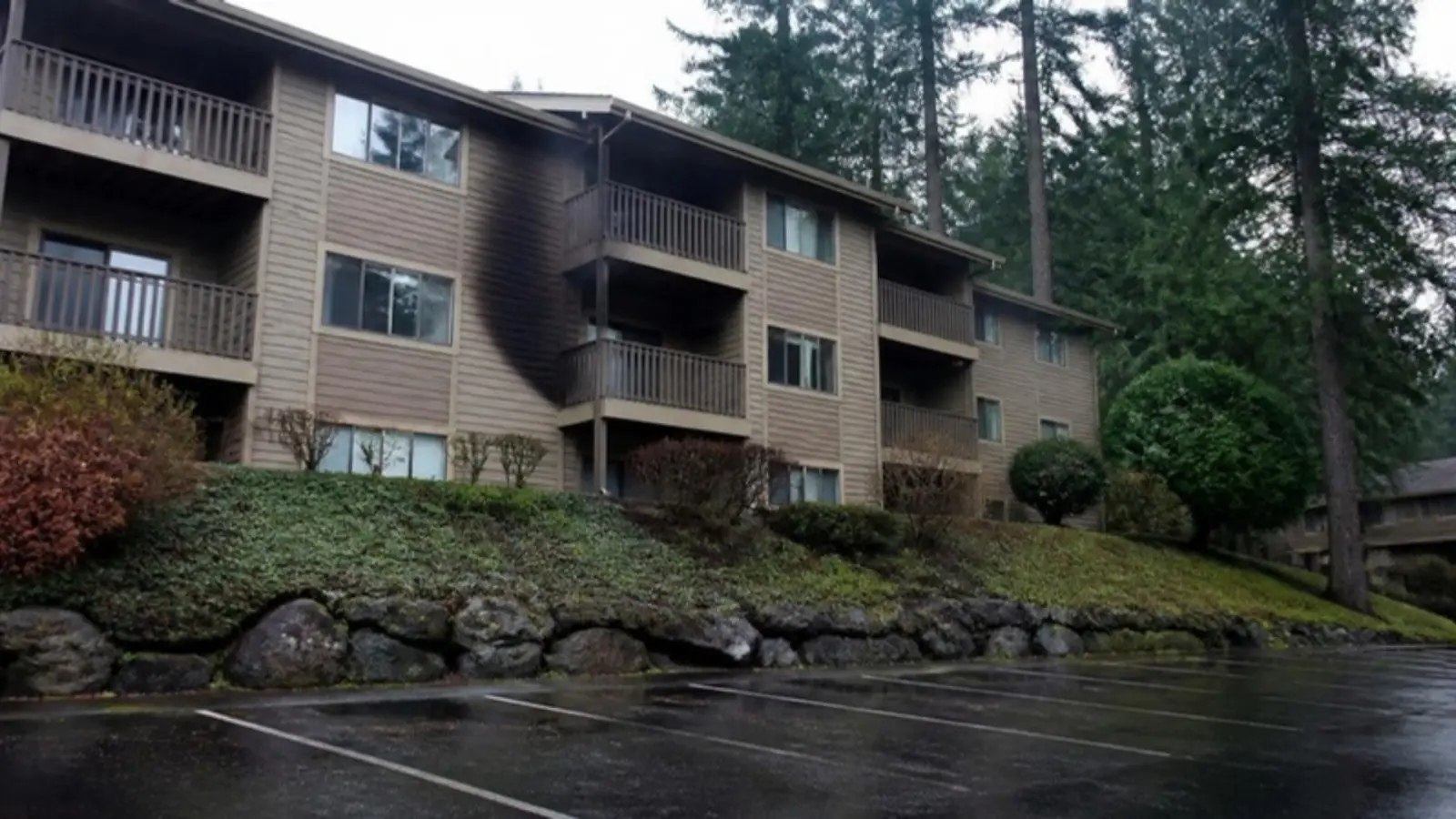
Wood-sided condominium building with balconies on a rainy hillside among tall evergreen trees.
Brickyard Road–Queensgate is an established part of Bothell on the King County side, made up mostly of residential neighborhoods, many organized as HOAs, with community clubhouses, pools and landscaped common areas, plus smaller office and service buildings. Many of its communities have been around long enough for their pipes, roofs and irrigation systems to show their age.
That age and layout shape the leaks. HOA communities often own long private water lines and irrigation systems that run under lawns, paths and parking areas, where a leak can soak into the ground for months with only a rising bill to show for it. Clubhouses and pool buildings have their own plumbing, roofs and mechanical rooms, used heavily in some seasons and barely at all in others. Smaller office buildings tend to have low-slope roofs and older plumbing that has been modified by several tenants over the years.
Real-world example
What a typical Queensgate leak call looks like
An HOA manager notices the community's master-meter bill has climbed for three billing cycles in a row, even through the rainy months when irrigation is off. Nothing looks wet. The specialist closes building valves one at a time, and the meter keeps moving with everything off except the main line to the clubhouse. A correlation test between the meter and the clubhouse shutoff points to a spot under a walking path. Ground microphones confirm a leaking joint on the service line. The fix is one small excavation in the path, and the board adds quarterly meter checks to the manager's routine.
Pro tip for HOA managers
Track the community's water meter monthly against the same month last year. A steady climb with no change in use is the earliest warning of a buried leak.
Seasonal buildings and irrigation
Pool and clubhouse buildings that sit mostly unused in winter can hide leaks until spring. Irrigation systems are another blind spot: a cracked lateral or stuck valve can run every night through summer in a planted bed where no one walks. Winterizing irrigation properly and checking it carefully at spring startup prevents both the water loss and the freeze damage that cause many spring leak calls.
Small office buildings
The smaller office and service buildings in the area usually have one or two stories, low-slope roofs with a few rooftop units, and plumbing that has been reworked by several tenants. Leaks tend to come from aging roof details, condensate lines from rooftop units, and restroom fixtures. Because these buildings are small, a single roof walk and a short plumbing check usually find the cause quickly, as long as someone looks at the whole roof and not just the spot above the stain.
Top services in Queensgate
Which leak services do Queensgate properties need most?
Four services that match HOA communities, clubhouses and small offices.
Commercial main water line repair
Long private service lines under lawns and paths leak quietly. Main water line repair confirms the leak at the meter and fixes it with as little digging as possible.
Our water bill keeps rising, but nothing is wet. What now?
Shut off irrigation and building valves one at a time while watching the meter. If it still moves, the leak is likely on a buried service line, which can be pinpointed acoustically.
Is the HOA responsible for the water line to each home?
It depends on the community's documents and how the lines were built. Some associations own shared mains, while owners maintain lines to their own homes.
Can irrigation leaks really be that costly?
Yes. A broken lateral or stuck valve can run every night for weeks before anyone notices. Monthly meter checks catch it early.
Our clubhouse leaks only in winter. Why?
Long wet stretches expose roof and wall weaknesses that summer storms don't. Low winter use also means leaks go unnoticed longer.
What should we do before reopening the pool building in spring?
Check for freeze damage on exposed piping, run every fixture, watch the meter with everything off, and look for stains on ceilings and walls before the season starts.
Do you work with small office buildings here too?
Yes. Office owners and tenants call about roof leaks, plumbing and HVAC leaks just like larger commercial buildings.
Queensgate leak?
Get your community or office leak found
Call and describe the property, the building and what you're seeing.