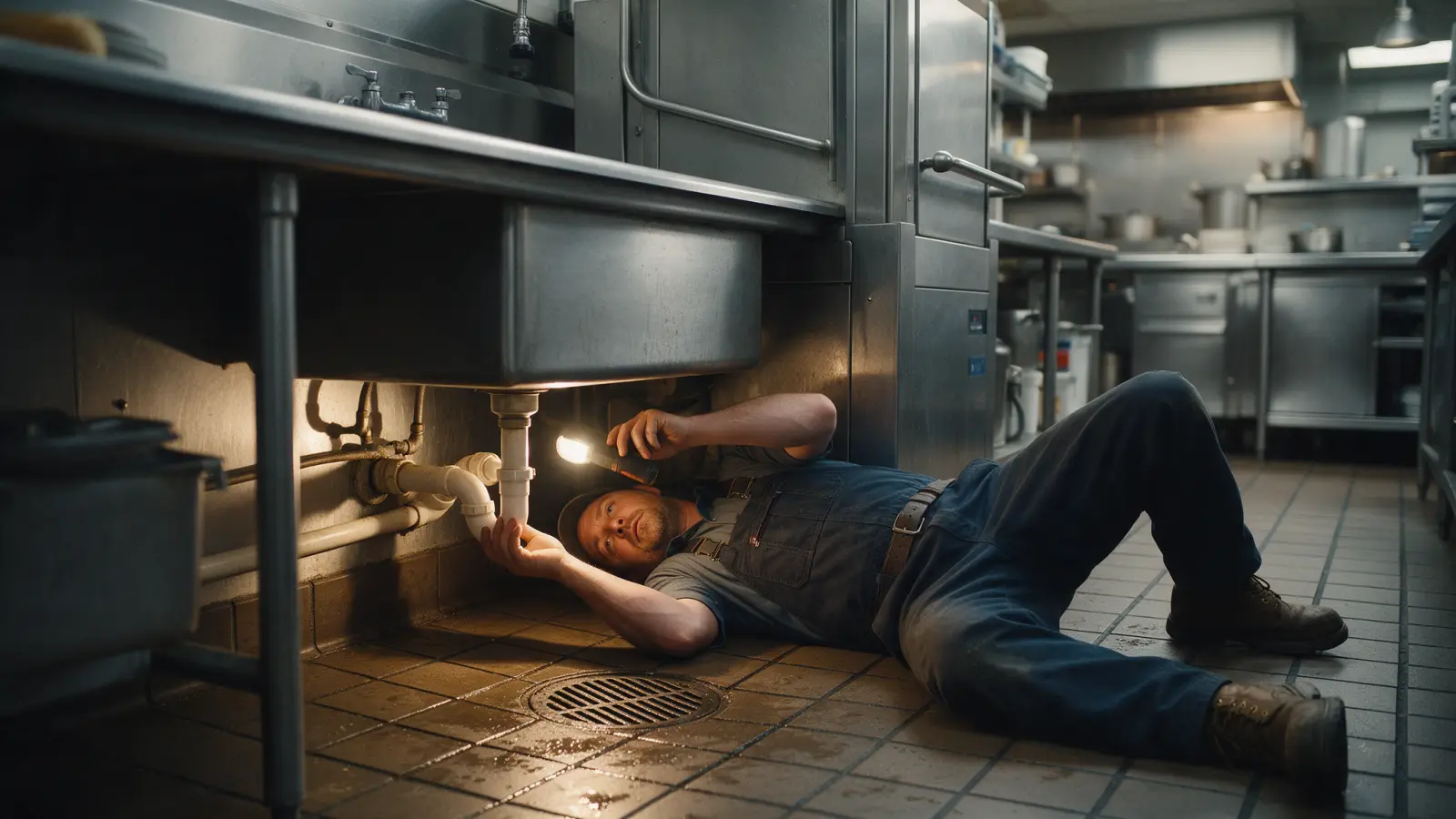
What is sewer and drain line leak repair?
Sewer and drain line repair fixes the gravity pipes that carry wastewater and stormwater away from a building. Inside, that includes the drain, waste and vent piping under floors and in walls. Outside, it's the building sewer, often called the side sewer in this region, that runs to the public main, plus storm drains, catch basins and roof leader lines on the site.
Drain leaks behave differently from supply leaks. A pressurized water line leaks all the time. A drain only leaks when water flows through it. So drain problems tend to show up as odors, slow drains, backups, settling pavement or soggy ground, not as a steadily spinning meter. Wastewater leaking into soil is also a sanitation problem, and roots or soil entering a broken pipe cause blockages that keep coming back.
Good drain work starts by looking inside the pipe. A camera inspection shows exactly where the pipe is cracked, offset, sagging or full of roots, and how far the damage runs. That's what decides whether you need a spot repair, a liner, or new pipe.
How are sewer and drain problems diagnosed and repaired?
Clean, then look
Lines packed with grease, scale or roots are cleaned first, usually with high-pressure water jetting or a mechanical cutter. Then a camera goes in through a cleanout or roof vent and records the whole run, with a locator marking the camera head's position and depth from the surface. You should get the video and a written summary.
Smoke and dye tests
To find broken or disconnected pipes, cross-connections between storm and sanitary lines, or dried-out floor drain traps letting sewer gas into the building, specialists use non-toxic smoke blown into the line, or dye flushed through a fixture and watched for downstream.
Repair options
- Spot repair. Excavating at one failed joint or crack and replacing that section. Best for an isolated defect.
- Lining. Installing a new pipe inside the old one from access points, covered in depth under trenchless pipe lining.
- Pipe bursting or replacement. Replacing long runs that are collapsed, badly sagged or undersized.
- Cleanouts. Adding cleanouts where none exist, so future maintenance doesn't mean pulling toilets or cutting floors.
Sags and bellies
A belly is a low section where the pipe has settled. Water and solids collect there, so it clogs repeatedly. Lining can't fix a belly because it follows the same sag. A significant belly usually needs excavation and re-bedding, or replacement at the correct slope.
What the pipe is made of matters
| Material | Typical problems |
|---|---|
| Cast iron | Internal scale, cracking, and rot-through along the bottom of horizontal runs. |
| Clay | Many joints that let roots in, cracking and broken bells. |
| Concrete | Erosion of the inside surface and joint separation. |
| ABS / PVC | Generally durable. Failures tend to come from poor bedding, settling or damage. |
Grease interceptors and traps
Kitchens are required to separate grease before it reaches the sewer, using grease traps or larger in-ground interceptors. When those are pumped too rarely, grease passes downstream and coats the building sewer. Pumping records and a camera check below the interceptor are part of diagnosing any restaurant drain problem.
What are the warning signs of a sewer or drain line problem?
- Several fixtures draining slowly at the same time.
- Sewer odor in restrooms, kitchens or near floor drains.
- Gurgling toilets and drains when other fixtures run.
- Backups at the lowest floor drain or cleanout.
- Sinking or cracking pavement along the sewer route.
- Soggy, unusually green patches in landscaping above the line.
- Damp floors or walls near drain lines inside the building.
- Pests, especially rodents, near drains and cleanouts.
One symptom deserves extra attention: a drain that backs up only during heavy rain. That usually means stormwater is getting into the sanitary line through a cross-connection, a broken pipe or an open cleanout, or the public main is surcharging. A backwater valve may be needed on the lowest fixtures to protect the building. Note the date and rainfall each time it happens, because that pattern helps the specialist and the sewer district find the cause.
What causes sewer and drain line failures?
- Root intrusion. Roots find their way into joints and cracks and grow into dense mats. The region's big trees make this common.
- Cast iron corrosion. Older cast iron drain pipe scales inside and can rot through along the bottom, a condition often called channeling.
- Joint offsets. Settling soil and ground movement shift pipe sections apart, opening gaps that catch debris.
- Grease. Fats, oils and grease from kitchens harden in lines and contribute to corrosion and blockages.
- Old materials. Clay and concrete pipe with many joints are prone to cracking and root entry.
- Construction damage. Excavation, heavy loads and new paving over shallow lines.
What can you check before calling?
- List which fixtures are slow or backing up, and on which floor. A single fixture points to a branch, many point to the main.
- Find the building's cleanouts, inside and outside, and check whether any are overflowing.
- Pour water into rarely used floor drains to refill dried-out traps, a common cause of sewer odor.
- Check outside along the sewer route for wet spots, odors or sinking pavement.
- Locate any past camera reports or as-built drawings showing the sewer route.
Pro tip: keep the camera video
Ask for the inspection video, the footage counts at each defect, and the marked locations. They make quotes comparable and future repairs faster.
Warning: skip the drain chemicals
Caustic drain cleaners rarely clear commercial main lines, can damage older pipe, and create a hazard for whoever opens the line next.
What happens during the specialist's visit?
- Symptom reviewWhich fixtures are affected, when, and what's been done before.
- CleaningJetting or cabling to restore flow and prepare the line for viewing.
- Camera inspectionThe run is recorded, and defects located and marked on the surface.
- DiagnosisRoots, cracks, offsets, bellies, corrosion or blockages, and how widespread they are.
- Repair optionsSpot repair, lining, bursting or replacement, with access and downtime compared.
- Repair and post-videoRepairs completed, then a final camera run confirms the result.
What affects the cost of sewer line repair?
| Factor | Effect on the job |
|---|---|
| Pipe size & length | Larger, longer lines cost more to line or replace. |
| Depth & surface | Deep lines under paving or buildings are harder to reach. |
| Defect type | Bellies and collapses limit trenchless options. |
| Access points | Missing cleanouts may need to be installed first. |
| Permits | Work in the right-of-way or at the public main needs permits. |
When is a sewer problem an emergency?
A sewage backup into a building is a health hazard and an emergency. Stop using water in the building, keep people away from the contaminated area, and call for emergency commercial leak repair to clear the line. Cleanup of sewage-contaminated areas should follow proper sanitation practices, and porous materials touched by sewage are usually discarded.
Sewer gas and manholes
Never enter manholes, vaults or deep pits. Sewer gases can be toxic and oxygen levels dangerously low.
Sewer and drain FAQ
Who owns the side sewer, the property or the city?
Property owners are often responsible for the side sewer from the building to the public main, sometimes including the connection. Rules vary by sewer district, so confirm with your provider.
Will jetting fix my sewer for good?
Jetting clears roots and buildup, but if roots are entering through broken joints, they'll grow back. A camera inspection shows whether a structural repair is needed.
How often should commercial drain lines be inspected?
Buildings with kitchens, older cast iron or a history of backups benefit from periodic jetting and camera checks. Others can inspect when symptoms appear or before buying a property.
Why does my restroom smell like sewer?
Common causes are dried-out floor drain traps, failed wax rings under toilets, cracked vent pipes or a broken drain. A smoke test finds where gas is escaping.
Can a sewer line be repaired without digging?
Often, yes, by lining or bursting. Collapsed sections and significant bellies usually still need excavation at those spots.
What about storm drains on the property?
Catch basins, roof leaders and storm lines clog with leaves and sediment and can crack like sewers. Blocked storm lines are a common cause of roof ponding and flooding around buildings.
Related services and areas
Restaurants and older retail buildings along the West Bothell corridor and in Downtown Bothell are typical places for grease-related and root-related sewer problems. If you're not sure your issue is a drain, read how to get a commercial leak fixed in Bothell. Kitchens should also see restaurant and commercial kitchen leak repair.