Call (425) 358-4365
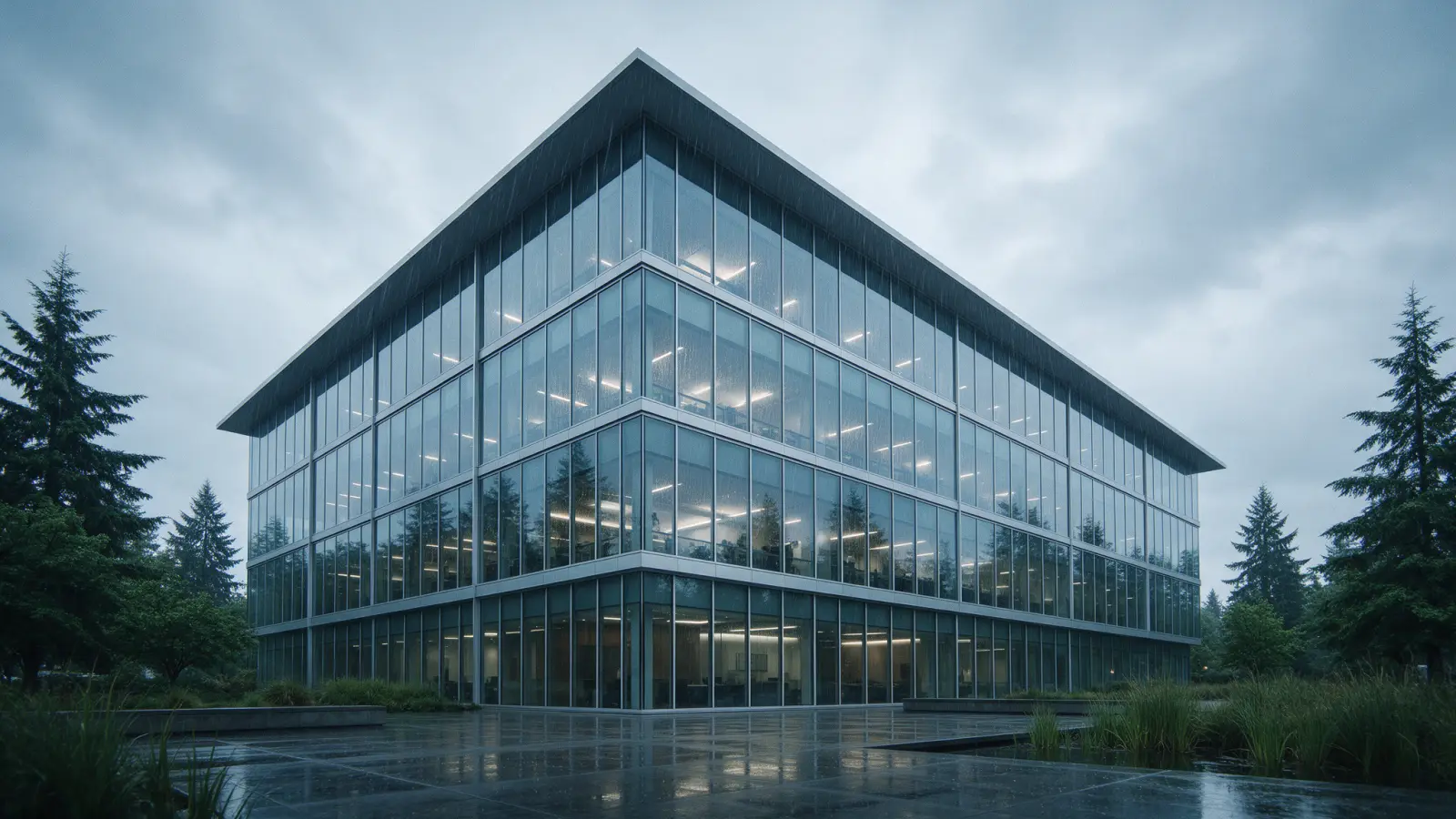
Rain streaking down the glass curtain wall of a modern office building surrounded by evergreens

Commercial leak detection & repair · Bothell, WA

Commercial leak repair in Bothell that starts at the source

Wet ceiling tiles, a water bill that suddenly jumped, water at the base of the storefront glass. One call connects your building with a local commercial leak specialist who traces the water with thermal, acoustic and moisture tools before anything gets torn open.

  • Commercial properties
  • Non-destructive detection first
  • King & Snohomish sides of Bothell
  • Free call, no obligation
Cutaway drawing of a commercial building: one leak traced from a roof membrane seam to a ceiling stain, a second from a pipe under the floor slab L3L2L1P1 MEMBRANE SEAM UNDER-SLAB LINE
Thermal scanWet insulation mapped under the membrane
Acoustic testUnder-slab leak located before any saw-cut
One callConnected to a local commercial specialist

The short answer

Who fixes commercial leaks in Bothell, and how do you get started?

Two kinds of specialists do it. Roofing and waterproofing contractors handle water coming in through roofs, walls and glass. Commercial plumbers handle water escaping from supply lines, drains, and heating and cooling pipes.

The hard part is usually knowing which one you need. On a commercial building, water rarely appears where it gets in. It runs along a roof deck, a beam, a conduit or a pipe before it finds a ceiling tile to drip through. Water on the third floor can start at a rooftop unit curb on the far side of the building, which is why commercial roof leak repair begins with a roof survey, not a bucket.

That's why the first visit should be a diagnosis, not a demolition. A good specialist starts with non-destructive tests: moisture meters, infrared cameras, acoustic listening gear, pressure tests and controlled water tests. These narrow down the source before anyone opens a ceiling, saw-cuts a slab or pulls up roofing. Our commercial leak detection page explains each method in plain terms.

Call (425) 358-4365 and describe what you're seeing. You'll be connected with a local commercial leak specialist who works in Bothell. If water is actively moving, say so right away. Many providers keep after-hours crews for emergency commercial leak repair, though availability depends on the provider and the hour.
Services

Commercial leak services, from roof membrane to under-slab pipe

Six common places to start. Each service has its own page explaining causes, warning signs, safe checks and what the provider's visit looks like.

Roof & envelope

Commercial Roof Leak Repair

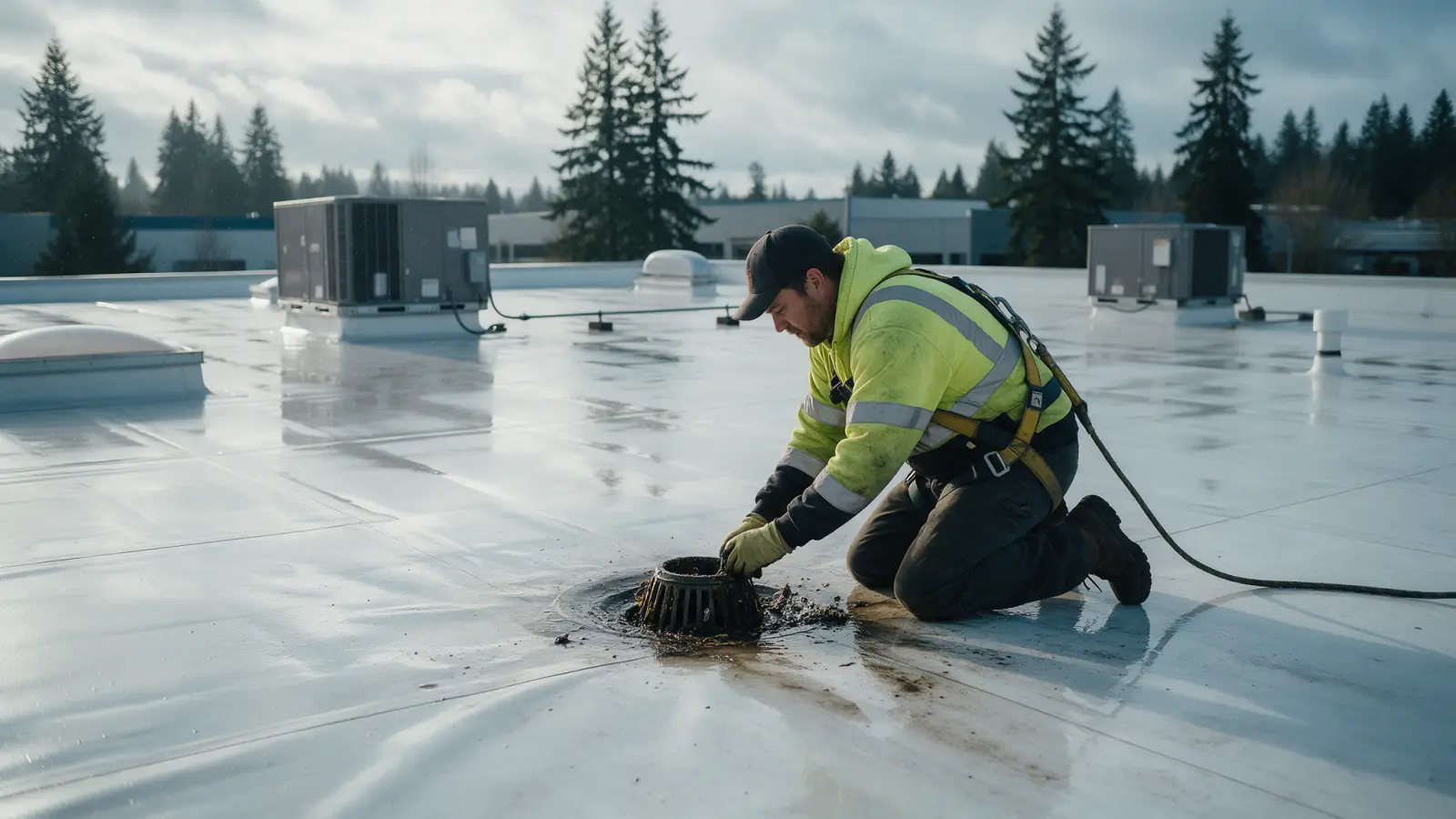
Most commercial roofs in Bothell are low-slope: TPO, PVC, EPDM, modified bitumen or built-up. They rarely fail in the open field of the membrane. Leaks cluster at the details: rooftop unit curbs, pipe penetrations, drains, scuppers and seams. Specialists survey the whole roof, test the suspect details and repair the actual entry point instead of patching above wherever the drip lands inside. That's the difference between one visit and five.

Roofing technician inspecting a roof drain on a wet low-slope commercial roof with rooftop HVAC units

Detection

Commercial Leak Detection

Not sure if it's the roof, a wall or a pipe? Detection comes first. Providers combine moisture mapping, infrared imaging, acoustic listening, tracer gas and pressure tests to locate the source without opening walls. You get a marked location and, ideally, written findings your insurer, landlord or board can use.

Below the floor

Slab Leak Detection & Repair

A warm spot on the floor, a meter that keeps turning with every fixture off, or damp carpet tiles nowhere near a sink usually means a pressurized line under the concrete. Specialists isolate and pressure-test each line, pinpoint the leak, then choose a spot repair, a reroute or lining.

Glass & framing

Curtain Wall & Storefront Leaks

Aluminum-framed glass is designed to let a little water in and drain it back out through weep holes. When gaskets shrink, sealant cracks or weeps clog, the water ends up inside. Water testing one section at a time shows which joint is failing, so only that joint gets repaired, not the whole elevation.

Mechanical

Chilled Water & HVAC Pipe Leaks

Hydronic loops leak quietly. It might be a pinhole in a chilled water line, a weeping valve stem or a corroded coupling above a drop ceiling. Makeup water use creeps up and tiles stain. Specialists rule out condensation, isolate the zone and repair it while the rest of the system keeps running.

Right now

24/7 Emergency Commercial Leak Repair

A burst supply line, a roof drain backing up during an atmospheric river, water pouring through a light fixture. Shut off the water if you can do it safely, keep people away from wet electrical, and call. The provider's first job is to stop the water and dry in the area. Finding and fixing the cause comes next.

Some leaks are easier to solve with a provider who knows the building type. Kitchens have grease lines, floor sinks and walk-in coolers, so restaurant and commercial kitchen leak repair is scheduled around service. Apartment and condo buildings raise questions about who owns which pipe, which multi-family and HOA leak services help sort out. Warehouses and plants have huge roofs, skylights and process piping, covered under industrial and factory leak repair.

Symptom checker

What is your building telling you?

Filter by where you're seeing the problem. Each symptom links to the service that usually fixes it.

Field guide

How commercial leaks start, how they're found, and what happens next

A plain-language guide for facility managers, owners and HOA boards.

Section: roof edge Section drawing of a parapet and low-slope roof showing water entering at a coping joint and traveling down to a ceiling stain COPING JOINT (ENTRY) COUNTERFLASHING MEMBRANE INSULATION + DECK CEILING STAIN

Where do commercial leaks come from?

Almost every commercial leak falls into one of three groups. The group decides who should look at it first.

Water coming in from outside. Low-slope roofs fail at seams, penetrations and drains long before the main membrane wears out. Flat roof patching and membrane repair covers TPO, EPDM and modified bitumen. Metal roof leak repair deals with fasteners, end laps and panel movement. Where the roof meets a wall, parapet and flashing repair is the usual fix. On the walls themselves, window and facade waterproofing handles sealant joints, sills and cladding.

Water escaping from piping. Pressurized lines leak around the clock. That includes the main water service line, domestic risers, lines buried under the floor that need slab leak repair, chilled water and HVAC loops, and cooling towers and boilers. Gravity drains leak only when they're used, so sewer and drain line leaks often show up as odors or settling rather than puddles. Even a running flushometer or faucet is a leak, one that only shows up on the water bill.

Water pushing in from below. Groundwater and surface runoff find cracks, cold joints and form-tie holes. That's the work of concrete and foundation leak repair and garage deck and elevator pit waterproofing.

Pro tip: keep a leak log

Note the date, time, weather and exact spot every time water appears. A leak that shows up only in wind-driven rain points to walls and glass. One that shows up on dry days points to plumbing. That log can save hours of testing.

Detection toolkit Illustration of leak detection: a thermal camera view of a wet roof area and an acoustic sensor on a floor above a leaking pipe INFRARED: WET INSULATION ACOUSTIC SIGNAL PIPE JOINT

How do specialists find a leak without tearing things apart?

Detection is a process of elimination, and the right tool depends on what's leaking.

  • Moisture mapping. Meters on ceilings, walls and floors outline the wet area and find its highest or wettest point.
  • Infrared thermography. Wet materials hold and release heat differently from dry ones, so a thermal camera can show saturated roof insulation or damp wall cavities. It needs a temperature difference to work, such as an evening after a sunny day.
  • Acoustic and tracer gas detection. Ground microphones pick up the sound of water escaping a pressurized pipe. A harmless tracer gas pushed through a drained line rises through soil or concrete right where it escapes.
  • Pressure and isolation tests. Closing valves zone by zone shows which section of piping is losing pressure.
  • Controlled water testing. Wetting one roof area, window or wall section at a time, from the bottom up, until the leak shows inside.
  • Camera inspection. A push or crawler camera inside drain and sewer lines shows cracks, offsets and roots.

On large or confusing buildings, providers often combine two or three methods before they agree on a source.

Warning: confirm before anyone cuts

Don't let anyone saw-cut a slab, open finished walls or start replacing roofing until a test has confirmed the source. Opening the wrong area wastes money and can void a roof warranty. Ask exactly which test pinpointed the leak.

After the repair Illustration of a repair report with a roof plan, a marked and repaired leak point, photos and a re-test checkmark RE-TESTPASSED

What happens after the leak is found?

Once the source is confirmed, the provider should explain the repair options, the access they need, and what the work means for tenants or operations. Common paths:

  • A detail repair on the roof, such as resealing a curb, rebuilding a pipe boot or heat-welding an open seam.
  • Restoring an older but sound roof with commercial waterproofing and roof coatings instead of a full tear-off, when a moisture survey shows the insulation is mostly dry.
  • Replacing failed gaskets and sealant on curtain wall and storefront systems, then water-testing the same section again.
  • A spot repair, a reroute through walls or ceilings, or an epoxy lining for a leaking slab line.
  • Trenchless pipe lining for cracked or root-damaged sewer laterals, so the parking lot or floor stays mostly intact.

After the repair, ask for proof: a re-test of the same area, photos of the repaired detail and a short written summary. Then deal with what the water left behind. Wet insulation, drywall and ceiling tiles that stay damp can grow mold, so drying or replacing them is part of finishing the job.

From first call to dry building

What happens when you call?

Four steps. You decide on every one of them, and nothing is booked without your OK.

  1. Describe the leak

    Tell us where the water shows up, when it started and what kind of building it is. It takes a couple of minutes.

  2. Get connected

    You're connected with a local commercial leak specialist who handles that kind of problem.

  3. Find the source

    The provider inspects, tests and explains the cause and your options. Ask for findings in writing.

  4. Repair and re-test

    Work starts once you approve the scope and price. A re-test confirms the leak is actually gone.

The cost of waiting

What happens if a commercial leak waits until next month?

In the Puget Sound region most rain falls between October and March, often as long, steady rain. A leak that drips now and then in September can run for weeks once the wet season settles in.

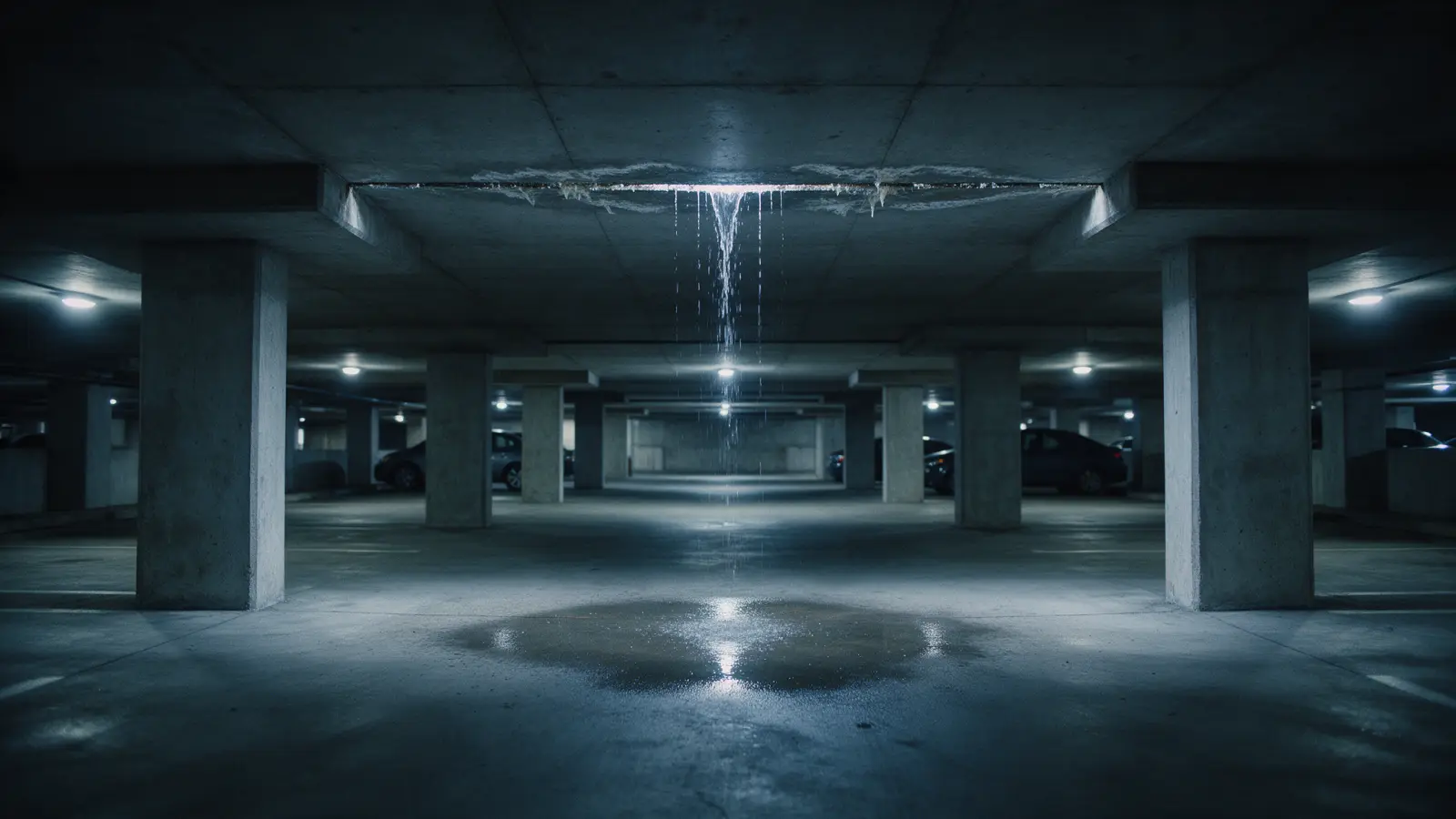
Water dripping from an expansion joint in an underground concrete parking garage
Water that seeps through a garage deck for months carries salts into the concrete and corrodes the steel inside.
Wet season (Oct–Mar): most of the year's rainDrier months: the best time for planned roof and facade work

Wet insulation stops working

Water trapped under a roof membrane soaks the insulation board. Wet board loses much of its insulating value and rarely dries out on its own. A small detail repair can grow into replacing a section of the roof.

Mold and air quality complaints

Ceiling tiles, drywall and carpet that stay wet can start growing mold within 24 to 48 hours. In offices, clinics and apartments, that means tenant complaints, closed rooms and remediation costs.

Corrosion and structural damage

Steel roof decks, fasteners, rebar and anchors corrode when they stay wet. In parking garages, road salt carried in on tires speeds that up, and concrete starts cracking and spalling.

Harder insurance claims

Many property policies treat sudden water damage differently from long-term seepage. Prompt action and good records generally help a claim, while delay can hurt it. Check your policy or ask your agent.

Pricing factors

What affects the cost of commercial leak repair?

Every building is different, so honest providers price a job after they've seen it. These are the factors that move the number most.

Commercial leak repair cost factors
FactorWhy it changes the price
AccessRoof height, lifts or scaffolding, ceilings above occupied space, and after-hours work all add labor.
Detection neededA quick visual check costs far less than an infrared survey, acoustic location or water testing across several days.
System typeMembrane type, pipe material and diameter, or the curtain wall system decide the parts and methods.
Extent of damageOne failed detail versus saturated insulation, corroded pipe runs or a cracked slab.
UrgencyEmergency and night response usually costs more than scheduled daytime work.
RestorationDrying equipment, new ceiling tiles and drywall, flooring and mold work are often priced separately.
Permits & shutdownsPermitted work, water or fire system shutdowns and tenant notices add coordination time.

Ask for a written estimate that separates detection, repair and restoration, and lists what's excluded. It makes quotes easier to compare and helps your insurer or board review them.

Service areas

Commercial leak help across Bothell's neighborhoods

Bothell spans King and Snohomish counties, and the buildings change from one side of town to the other. So do the leaks.

Snohomish County · business parks

Canyon Park

Office, lab and light-industrial campuses with large low-slope roofs and lots of rooftop mechanical equipment. Roof drains, unit curbs and chilled water lines top the list. See leak repair in Canyon Park.

King County

Downtown Bothell

Older Main Street storefronts and masonry parapets sit beside newer mixed-use buildings with podium garages. Restaurants add kitchen plumbing to the mix. Read about downtown Bothell leak repair.

Snohomish County

Thrasher's Corner

Retail centers and apartment and condo communities in north Bothell, where storefront roofs, shared plumbing and unit-to-unit leaks are typical calls. See Thrasher's Corner leak help.

King / Snohomish · office & campus

North Creek

Business-park offices along North Creek Parkway, many with curtain walls and storefront entries, in a creek valley where groundwater matters below grade. More on North Creek leak services.

King County

Westhill

Hillside condo and HOA communities west of downtown. Slope drainage against foundations, balconies and stacked plumbing drive many of the leak calls. Details on Westhill leak services.

King County

West Bothell

The Bothell Way NE (SR 522) corridor toward Kenmore, with roadside retail, restaurants and apartments. Sewer laterals and small flat roofs are the usual concerns. See West Bothell leak repair.

King County

Brickyard Road–Queensgate

Established neighborhoods with HOA communities, clubhouses and smaller office buildings. Long private service lines, irrigation and older low-slope roofs are common leak sources. More on Queensgate leak help.

King County

Norway Hill

A hillside area of homes, HOAs and community buildings such as churches and schools. Steep lots push groundwater toward foundations, and long service lines can leak unnoticed. See Norway Hill leak services.

Before work starts

How do you check a commercial leak contractor?

Commercial work carries more risk than a house call: bigger roofs, occupied buildings, tenants, warranties and insurance requirements. Whoever comes out to your building, a few quick checks protect you before anyone climbs a ladder or opens a ceiling.

  • Look up their Washington contractor registration on the Department of Labor & Industries (L&I) website.
  • Ask for a certificate of insurance, naming your property or management company if your lease or policy requires it.
  • If your roof is under a manufacturer's warranty, ask whether the roofer is authorized to work on it.
  • Get the scope, price and exclusions in writing before work starts.
  • Ask how they'll prove the leak is fixed.

A good specialist answers these without hesitation and puts the scope in writing. If you want to know more about who we are, read about Bothell Leak Pros.

Good questions

Commercial leak questions, answered

What Bothell property managers, owners and HOA boards ask most before they call. Don't see yours? Ask on the phone.

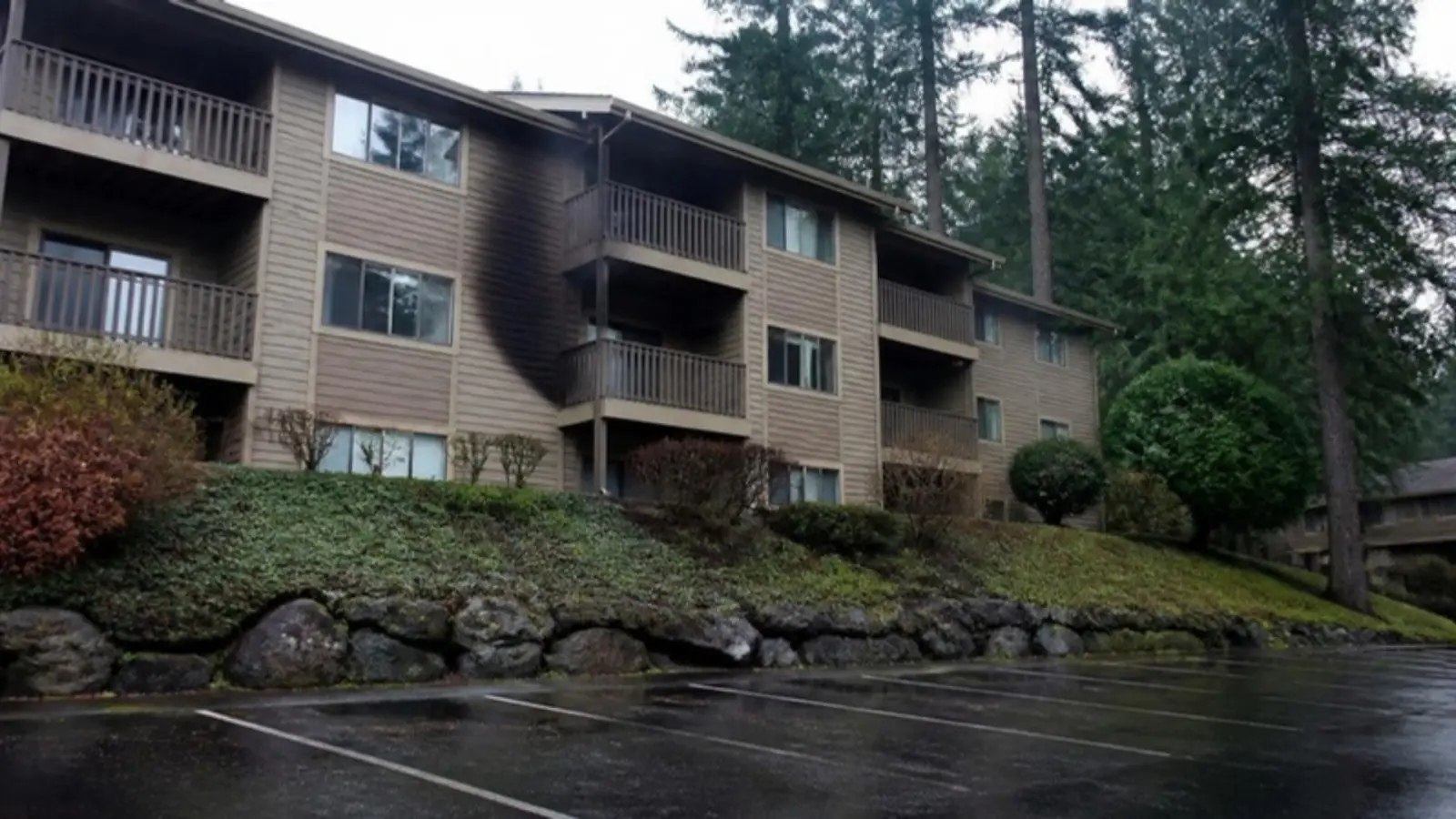
Wood-sided condominium building with balconies on a rainy hillside among tall evergreen trees
Wood-sided condominium building with balconies on a rainy hillside among tall evergreen trees.
Ask us: (425) 358-4365
How do I know if a leak is from the roof or from plumbing?

Watch when it happens. A leak that appears only during or after rain is almost always the roof, walls or glass. One that appears in dry weather, or while the water meter moves with every fixture off, points to plumbing. Some buildings have both at once.

Can a leak be found without cutting into walls, floors or the roof?

Usually, yes. Moisture meters, infrared cameras, acoustic equipment, tracer gas and pressure tests can narrow a leak down to a small area. Some access is often still needed for the repair itself, but it should be small and targeted.

How much does commercial leak detection cost?

It depends on the building, the access and which methods are needed. Checking a single roof detail costs far less than a full infrared roof survey or tracing several lines under a slab. Providers quote once they understand the problem.

Is anyone available nights and weekends?

Many commercial leak providers offer after-hours emergency service. Call (425) 358-4365 any time and describe the situation. Availability depends on the provider and the hour, so if water is moving, shut it off and protect equipment while you wait.

Will a leak repair void my roof warranty?

It can if the repair doesn't meet the manufacturer's requirements. If your roof is under warranty, tell the provider up front, and check whether the manufacturer requires an authorized contractor or needs to be notified first.

Should I call my insurance company before or after the repair?

Report sudden water damage promptly, and document everything: photos, video, the confirmed cause and every invoice. Insurers generally expect you to stop further damage right away. Coverage varies by policy, so check yours or ask your agent.

Do you cover both the King County and Snohomish County parts of Bothell?

Yes. Calls from anywhere in Bothell are routed to providers who cover that area. That includes Canyon Park and Thrasher's Corner on the Snohomish County side, and Downtown, Westhill and Norway Hill on the King County side.

Can repairs be scheduled around business hours or tenants?

Often, yes. Many commercial providers can work early mornings, evenings or weekends for restaurants, shops and offices. They can also stage the work so only part of the building is affected at a time. Ask when you schedule.

Who pays when the leak is in a tenant space or condo unit?

Start with the lease or the HOA's governing documents. They usually define who maintains which pipes and building parts. The provider can document the source so it's clear who's responsible.

What should I do while I wait for the specialist?

Contain the water and keep the area safe. Close the zone or main valve for a pipe leak, move inventory and electronics, set out buckets, and keep people away from wet electrical. Photograph everything before cleanup starts.

Water where it shouldn't be?

Talk to a Bothell commercial leak specialist today

Describe what you're seeing. You'll be connected with a local provider who can tell you the next step.

(425) 358-4365

Free call. No obligation. Commercial, multi-family and HOA properties in Bothell, WA.

Call (425) 358-4365