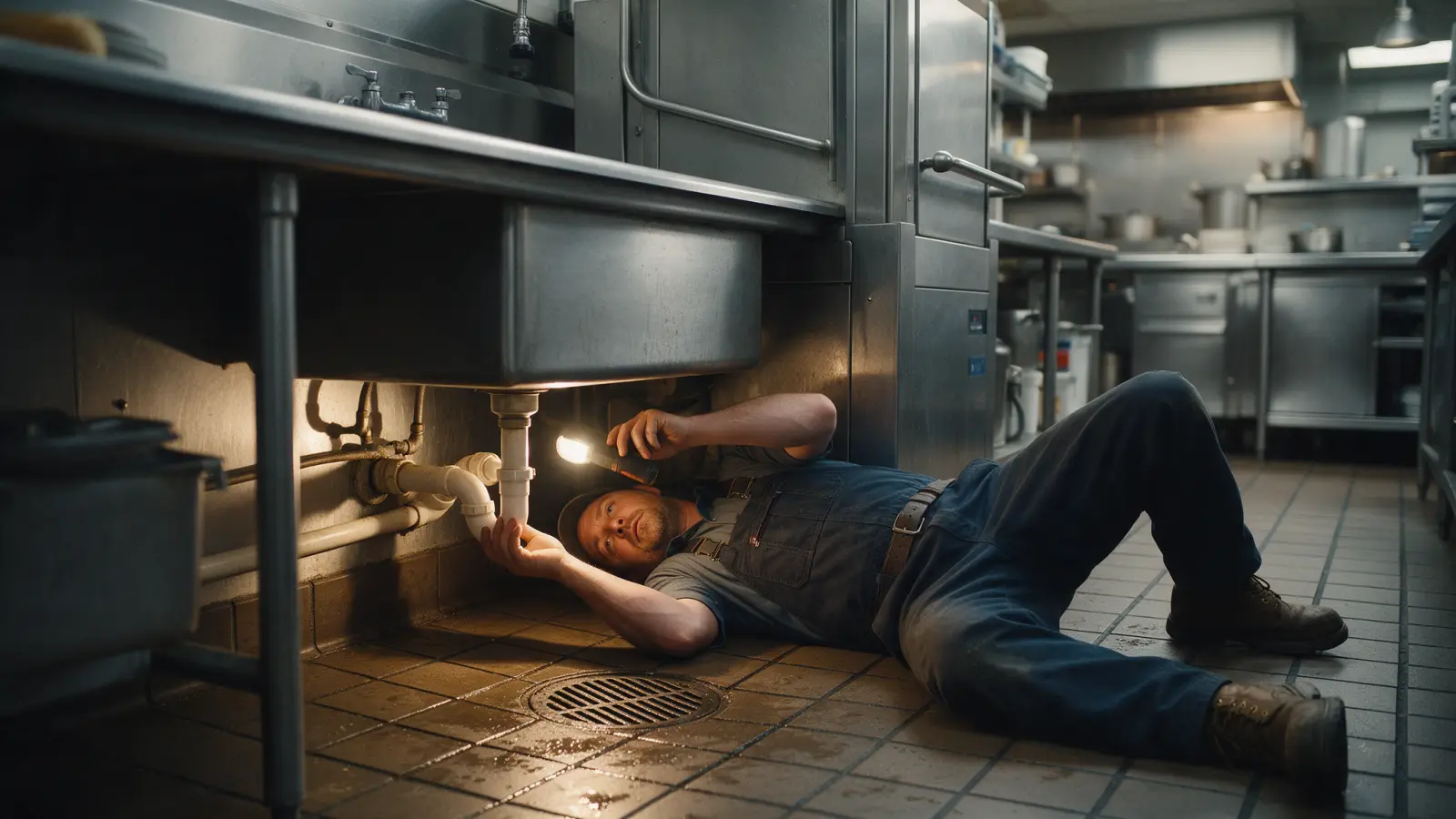
What is restaurant and commercial kitchen leak repair?
Commercial kitchens are some of the hardest-working plumbing environments in any building. In a few hundred square feet there may be a dish machine, a three-compartment sink, hand sinks, prep sinks, a pre-rinse sprayer, ice machines, a mop sink, floor sinks and floor drains, a grease interceptor, a high-capacity water heater, and walk-in coolers and freezers with their own condensate lines. Above it all, the roof is cut open for exhaust hoods, makeup air units and refrigeration lines.
Restaurant leak repair covers all of that: supply leaks at equipment connections, drain and grease line problems, refrigeration condensate, and roof leaks around kitchen penetrations. What makes it different from leak repair in an office is timing and hygiene. A leak can't wait for a convenient week, but the kitchen also can't shut down at lunch. Wet floors are a slip hazard for staff carrying hot food, and standing water is a health inspection issue. Good kitchen work is fast, scheduled around service where possible, and leaves the space clean and sanitary.
Plenty of kitchen "leaks" aren't leaks in the pipe at all. They're overflowing floor sinks, condensate that has nowhere to go, or grease restricting a drain until it backs up. Sorting out which one you have is the first job.
Where do kitchen leaks usually come from?
| Equipment or area | Typical leak causes |
|---|---|
| Dish machine | Failed door gaskets, loose supply and drain connections, a cracked drain hose, booster heater leaks. |
| Ice machine | Supply line and filter housing leaks, clogged or improperly gapped drains, bin drain backups. |
| Floor sinks & drains | Grease and food buildup, broken grates, cracked bodies or failed connections below the floor. |
| Walk-in cooler/freezer | Blocked evaporator condensate lines, frozen drain lines in freezers, door heater or gasket issues. |
| Sinks & sprayers | Worn faucet cartridges, pre-rinse spray valve leaks, loose wall-mounted faucets. |
| Water heater | Relief valve discharge, tank failure, leaking connections under heavy daily demand. |
| Roof above the kitchen | Exhaust fan curbs, grease-damaged membrane, makeup air unit and refrigeration line penetrations. |
How are kitchen leaks repaired?
Equipment connections
Supply connections at dish machines, ice machines, steamers and combi ovens are checked for loose fittings, worn hoses and failed shutoff valves, then rebuilt with the correct fittings and properly supported. Equipment drains are checked for the required air gaps and indirect connections to floor sinks, which keep wastewater from backing into food equipment.
Drains, floor sinks and grease lines
Kitchen drains clog with grease, food solids and dish machine residue. They're cleared by jetting, not just snaking, which pushes the problem further down the line. A camera inspection then shows whether the line is cracked, sagged or heavily coated. Broken floor sink bodies or connections under the floor are repaired, and the grease interceptor's inlet, outlet and baffles are checked during the same visit.
Refrigeration condensate
Walk-in evaporators produce condensate that has to drain properly. In freezers, the drain line usually needs heat tape to keep it from freezing. Clogged, frozen or poorly sloped condensate lines are cleared, re-pitched or fitted with working heat trace. The refrigeration contractor handles the refrigeration system itself.
Roofs over kitchens
Kitchen exhaust leaves grease on the roof around the fan. Over time that can soften and damage some roofing membranes. Repairs include cleaning, replacing damaged membrane with a grease-resistant material such as PVC, installing a grease containment system at the fan, and properly flashing the curb.
What are the warning signs of a kitchen leak?
- Water pooling under the dish machine or ice machine after a shift.
- Floor sinks that overflow when the dish machine drains.
- Sewer or rancid grease smells from floor drains.
- Ice buildup on walk-in freezer floors or around the evaporator.
- Ceiling stains near the exhaust hood or makeup air unit.
- Loose or cracked floor tiles and soft grout lines near equipment.
- A water bill that climbs while covers stay the same.
- Slow drains that get worse as the week goes on.
What causes restaurant and kitchen leaks?
- Grease. Fats, oils and grease cool and harden in drains, causing backups and corroding older pipe.
- Heavy use. Equipment runs many cycles a day, wearing gaskets, hoses and valves far faster than in an office.
- Heat and vibration. Hot water, steam and vibrating equipment loosen connections over time.
- Cleaning practices. Hosing down floors and equipment pushes water into joints and wall bases, and harsh chemicals degrade seals.
- Interceptor neglect. Grease interceptors pumped too rarely let grease pass into the building sewer.
- Roof grease. Exhaust fans without proper containment drip grease onto the roof membrane.
When a kitchen leak turns out to be the line under the floor, see slab leak detection and repair for supply lines, or sewer and drain line repair for drains.
What can kitchen staff check safely?
- Know where each equipment shutoff and the kitchen's main water valve are, and that they work.
- Clean floor sink strainers and grates daily, and never pour grease down any drain.
- Watch the dish machine through a cycle to see whether water comes from the door, the connections or the drain.
- Check the walk-in evaporator for ice and the condensate line for drips or blockage.
- Keep grease interceptor pumping records handy, along with the last service date.
Pro tip: schedule a pre-season drain clean
A regular jetting of kitchen lines, on a schedule that matches your volume, prevents most Friday-night backups. Pair it with interceptor pumping.
Warning: no enzymes or caustics as a fix
Drain additives and caustic cleaners don't remove hardened grease from main lines, and they can move grease further down where it's harder to reach.
What happens during the specialist's visit?
- TimingThe visit is scheduled between services, after close or before prep, when possible.
- Source checkSupply, drain, condensate or roof, confirmed at the equipment.
- Drain inspectionKitchen lines are jetted and camera-inspected if drains are involved.
- RepairConnections, valves, floor sinks, condensate lines or roof details are fixed.
- Sanitary handoverThe work area is cleaned and the equipment run-tested before staff return.
- Prevention notesDrain cleaning frequency, interceptor schedule and equipment items to watch.
What affects the cost of kitchen leak repair?
| Factor | Effect on the job |
|---|---|
| After-hours timing | Late-night or early-morning work to avoid service. |
| Equipment access | Moving heavy equipment or working behind lines. |
| Drain condition | Heavy grease and old cast iron add jetting and repair time. |
| Floor work | Quarry tile and sanitary floor finishes are costly to open and restore. |
| Roof grease damage | Membrane replacement and grease containment around fans. |
When is a kitchen leak an emergency?
A sewage or grease backup through floor sinks, a burst supply line, a failed water heater or water near cooking equipment and electrical connections all need immediate action. Stop water use, shut off the affected supply, keep staff off wet floors, and call for emergency commercial leak repair. If food-contact areas were contaminated, follow your health department guidance before reopening.
Wet floors near hot equipment
Close the affected line or station. Slips near fryers and stoves can cause serious injuries.
Restaurant leak FAQ
Can repairs be done after we close?
Often, yes. Many providers schedule restaurant work late at night or early in the morning so the kitchen is ready for the next service.
Why do our floor sinks overflow?
Usually grease and solids restricting the drain line, or several machines draining at once into a line that's partly blocked. Jetting and a camera check usually find the cause.
How often should kitchen drains be cleaned?
It depends on your menu and volume. High-volume kitchens frying and cooking with a lot of fat need more frequent jetting. Your history of slowdowns is the best guide.
Why is there water under our walk-in freezer?
Common causes are a frozen or clogged evaporator drain, failed drain line heat tape, or door gasket issues letting moist air in. The drain is usually the first thing to check.
Will a leak affect our health inspection?
Leaks, standing water and plumbing problems can be noted by inspectors. Fixing leaks promptly and keeping records of repairs helps.
Why does the roof leak near our hood fan?
Grease from exhaust can damage the roof membrane, and the fan curb is a large penetration. Grease containment and a grease-resistant membrane repair usually fix it. See commercial roof leak repair.
Related services and areas
Restaurants and cafes in Downtown Bothell and along the West Bothell corridor deal with the full mix of kitchen leaks, from floor sinks to roof fans. Fixture problems at hand sinks and restrooms are covered under commercial faucet and flushometer repair. For every other type of building leak, see leak repair for Bothell businesses.