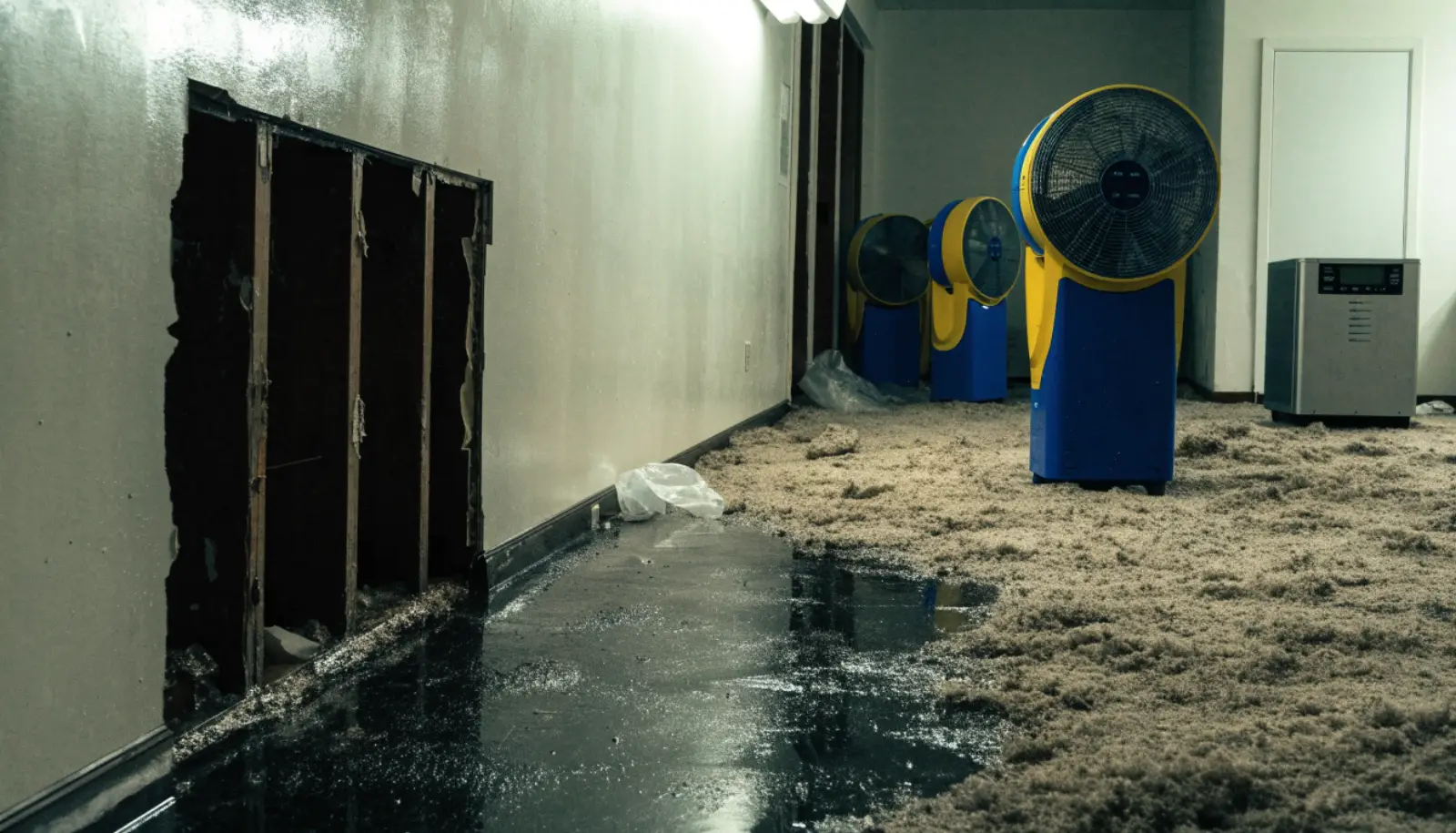
What should you do in the first 15 minutes?
Act in this order. People first, then the water, then property.
- Get people clearMove everyone away from water near electrical panels, outlets, light fixtures and equipment, and away from sagging ceilings.
- Make it electrically safeIf water is reaching electrical equipment, switch off those circuits only from a dry location. If you can't safely reach the panel, wait for qualified help.
- Stop the waterClose the nearest isolation valve, the floor or zone valve, or the building main. For hot water leaks, also shut off the water heater or boiler.
- Call for helpCall (425) 358-4365 and say it's an emergency. Describe the source, the building type and what's at risk.
- Protect what you canCover equipment with plastic, move stock and files, put out buckets and mark slip hazards.
- DocumentTake photos and video of the water, the source and the damage before cleanup starts.
Fire sprinkler discharge is different
If water is coming from a fire sprinkler head or sprinkler pipe, call your fire alarm monitoring company or 911 as your procedures require. Sprinkler control valves should only be operated by authorized people, because closing them impairs fire protection for the building.
What does emergency commercial leak repair cover?
Emergency leak repair is the urgent response that stops active water, makes the building safe, and holds things together until the permanent fix. For commercial buildings it usually covers burst or split supply pipes, failed fittings and couplings, broken water heaters, roofs leaking heavily during storms, storm-damaged membranes and flashings, sewage backups, flooding in lower levels and elevator pits, and large leaks on HVAC piping.
The goal of the first visit isn't always a complete repair. It's control: stop the water, protect people and property, and buy time. That might mean capping a line, installing a temporary clamp, tarping or sealing a roof area, clearing a drain or setting up pumps. The permanent repair, and the investigation into why it happened, often follows once conditions allow. Ask whether a temporary fix was used so you know a follow-up is needed.
Availability after hours depends on the provider and the time. When you call, you'll be connected with a local provider who handles commercial emergency work, and they'll tell you what they can do and when.
On multi-tenant buildings, communication is part of the emergency response. Tell tenants which areas are affected, whether water or power will be off and for how long, and where to report new leaks. A quick email or posted notice prevents people from turning valves back on, walking under damaged ceilings, or piling wet materials where the crew needs to work.
How is each type of emergency handled?
| Emergency | Do this now | What the crew does |
|---|---|---|
| Burst supply pipe | Close the nearest valve or the main. | Caps or repairs the pipe, restores water to unaffected areas. |
| Roof leak in a storm | Contain water inside, protect equipment, check drains if safe. | Clears drains, applies a temporary seal or tarp, returns for the permanent repair. |
| Water heater failure | Shut off cold supply and fuel or power to the heater. | Isolates and drains the unit, then repairs or replaces it. |
| Sewage backup | Stop water use in the building and keep people away. | Clears the blockage, then camera-inspects the line. |
| Flooded lower level | Shut off power to the area, take elevators out of service. | Pumps out, finds the source, restores drainage. |
| HVAC main leak | Close isolation valves if known, shut down loop pumps if safe. | Isolates the section, repairs, refills and restarts. |
How do you know it's an emergency, not a scheduled repair?
- Water is actively running or spraying and you can't stop it.
- Water is near electrical panels, outlets, lights or IT equipment.
- A ceiling is sagging or bulging from water above.
- Water is spreading into tenant spaces or units below.
- Sewage is backing up into the building.
- Water is rising in a lower level or elevator pit.
- Loss of heat in freezing weather that could freeze other pipes.
- Pavement is collapsing or water is gushing from the ground.
What causes commercial water emergencies?
- Pipe and fitting failure. Corroded pipe, failed couplings, burst supply hoses and water heater tanks.
- Storm conditions. Atmospheric rivers and windstorms overload drains, tear roof membranes and lift flashing.
- Freezing. Occasional hard freezes split pipes in unheated areas, exterior walls and rooftop units.
- Blocked drains. Clogged roof drains and sewer lines back water up into buildings.
- Equipment failure. Ice machines, dishwashers, cooling equipment and sump pumps.
- Construction and tenant work. Nicked pipes, open roofs and disturbed fittings during renovations.
How can you be ready before an emergency?
- Label the building main, floor and zone shutoff valves, and make sure they turn.
- Make sure key staff know where the shutoffs and electrical panels are.
- Keep an emergency kit: buckets, plastic sheeting, towels, a wet vac, tape and a flashlight.
- Keep the emergency number saved, along with insurance and fire alarm company contacts.
- Clean roof drains before the wet season and after major storms.
Pro tip: tag the shutoffs
A bright tag on each main and zone valve, plus a simple map by the electrical room, can save precious minutes for whoever is on site when a pipe lets go.
Warning: don't climb onto a roof in a storm
Wet membranes, wind and darkness make storm roof access dangerous. Contain water inside and let the crew handle the roof.
What happens when the emergency crew arrives?
- Safety checkElectrical hazards, ceilings and slip hazards are assessed first.
- Stop the waterThe source is isolated and capped, clamped or sealed.
- Temporary protectionRoof dry-in, tarps, diverters or pumps as needed.
- Restore what's safeWater service is restored to unaffected areas.
- DocumentPhotos, the cause if known, and work done, for your insurer.
- Plan the permanent fixA follow-up repair is scheduled, plus drying and restoration.
What affects the cost of emergency leak repair?
| Factor | Effect on the job |
|---|---|
| Time of call | Nights, weekends and holidays usually cost more. |
| Temporary vs permanent | A temporary fix now and a permanent repair later means two visits. |
| Access | Roofs in storms, shafts and ceilings over occupied space. |
| Equipment | Pumps, tarps and specialty parts. |
| Restoration | Water extraction and drying are typically separate services. |
What happens after the water stops?
Two things start right away. First, drying. Wet drywall, ceiling tiles, insulation and carpet should be dried or removed quickly to limit mold, usually by a water damage restoration company using extraction, air movers and dehumidifiers. Second, the investigation. Find out why it happened so it doesn't happen again. A pipe that burst from corrosion may have neighbors in the same condition, and a roof that leaked in one storm will leak in the next. Our commercial leak detection page explains how sources are confirmed.
Call your insurer early
Report the loss promptly, share your photos, and keep every invoice. Policies generally expect you to take reasonable steps to limit further damage.
Emergency leak FAQ
Is someone really available at night?
Many commercial leak providers run after-hours emergency service. Availability depends on the provider and the time, so call, describe the situation, and you'll be told what response is possible.
Should I shut off the main water valve?
If you can't isolate the leak with a closer valve, yes. Remember that shutting the main affects the whole building, including restrooms and some equipment.
Can a roof be fixed during a storm?
Usually only temporarily. Crews can clear drains and apply wet-surface sealants or tarps when it's safe. Permanent repairs need drier conditions.
Who handles water cleanup and drying?
Leak repair crews stop the water. Water damage restoration companies handle extraction, drying and mold prevention. Mention it when you call if you need both.
What if the leak is in a tenant's space?
Stop the water first, whoever is responsible. Then document the source so the lease or HOA documents can sort out who pays.
Do I need to call the fire department for a sprinkler leak?
Follow your building's fire safety procedures. Activated sprinklers usually trigger the alarm company. Never shut a sprinkler valve unless you're authorized and trained to do so.
Related services and areas
Restaurants and shops in Downtown Bothell and retail centers around Thrasher's Corner can't afford long closures after a leak, so fast containment matters. Once the emergency is under control, our Bothell commercial leak specialists can help with the permanent repair. Storm roof leaks usually lead to commercial roof leak repair, and burst lines to slab or main line work.