General information, not insurance or legal advice
Coverage depends entirely on your policy wording, endorsements and the facts of the loss. Read your policy and talk to your agent or broker about your specific situation.
What should you do in the first hours after a leak?
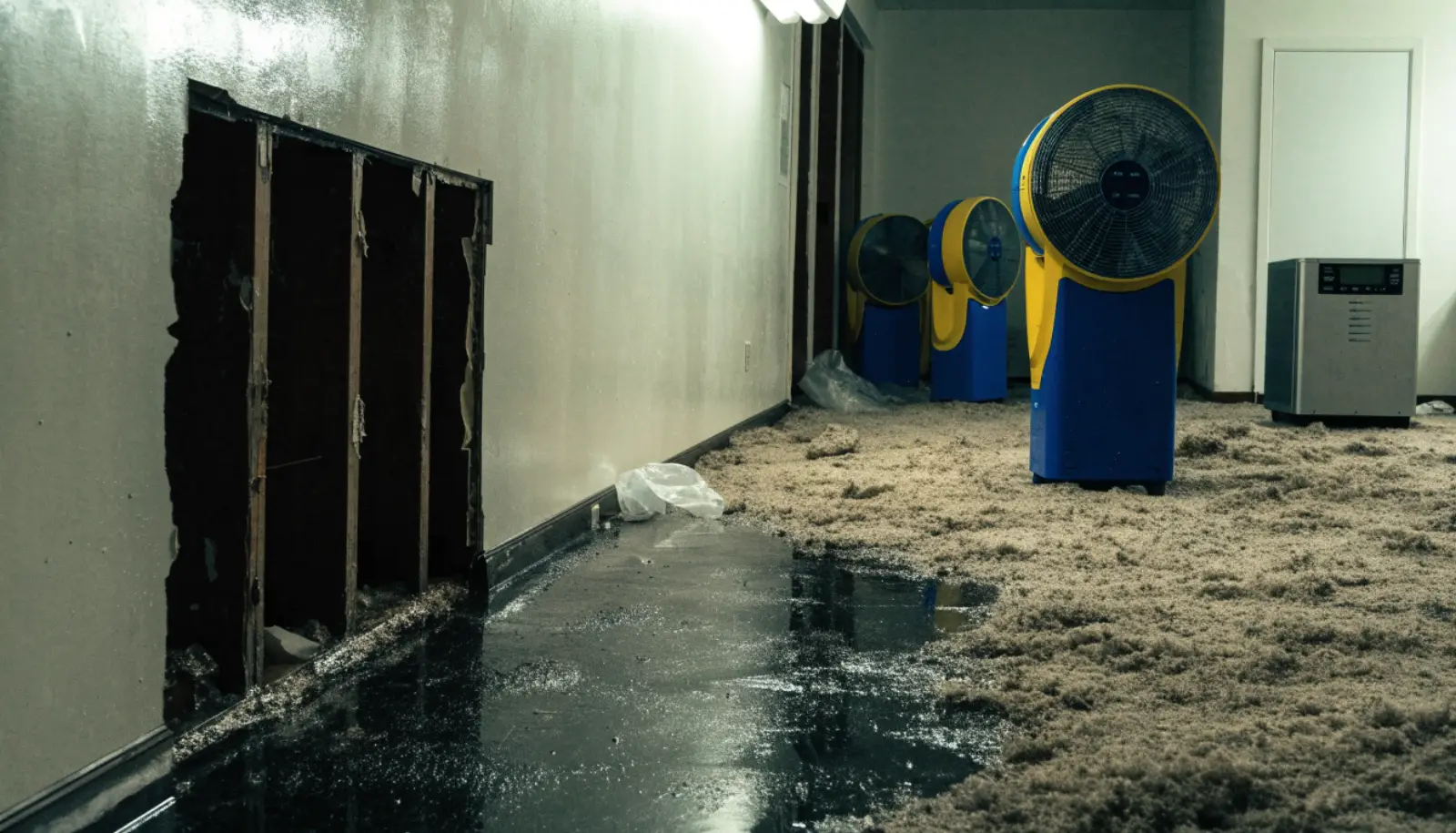
Two things matter most early on: stopping further damage and capturing evidence before it disappears. Most property policies expect the insured to take reasonable steps to protect property from further damage, so act quickly to stop the water. Shut off the supply, call for emergency leak repair, and get water extraction and drying started.
Before and during that work, document everything:
- Wide photos and video of each affected room, then close-ups of the damage.
- The visible source, if there is one: a burst fitting, a failed hose, water coming through the ceiling.
- Water depth or spread on floors, stains on ceilings and walls, and damaged contents and equipment.
- The time you discovered the leak and the time the water was stopped.
- Who was notified and when: tenants, management, owner, insurer.
Why does the leak source matter so much for a claim?
Property policies often treat water damage differently depending on the cause. Many cover sudden and accidental discharges, such as a pipe that bursts or a fitting that fails, while excluding or limiting damage from long-term, repeated seepage, wear and tear, deterioration or poor maintenance. Some policies also treat flood and surface water, groundwater and sewer backup separately, sometimes needing specific endorsements.
That makes an accurate, documented source central to the claim. A written report from a qualified specialist should state what failed, how it was confirmed, what evidence supports it, and the extent of affected areas. Guesswork, or a repair contractor's quick note, can leave questions an adjuster will need answered. Professional commercial leak detection exists for exactly this.
What evidence should you keep?
| Item | Why it helps |
|---|---|
| Dated photos and video | Shows the damage before cleanup and repairs changed it. |
| Source report | Explains what failed and how that was confirmed. |
| Failed parts | The burst fitting, split hose or cracked valve can be inspected later. Keep it labeled. |
| Moisture readings | Documents how far water spread, which supports the scope of drying and repairs. |
| Mitigation invoices | Shows prompt action to limit damage, and what it cost. |
| Repair estimates | Itemized scopes that separate the cause repair from resulting damage repairs. |
| Contents and equipment list | What was damaged, with age, value and photos. |
| Maintenance records | Roof inspections, plumbing service and prior repairs show the property was maintained. |
Pro tip: ask the adjuster before discarding
Ask whether the adjuster wants to see damaged materials or failed parts before they're thrown out. If items must be removed for safety or drying, photograph them first and keep samples where practical.
What does a typical claim timeline look like?
- Stop and protectShut off the water, make the area safe, start drying.
- Notify promptlyReport the loss to your agent or insurer as soon as practical. Policies often require prompt notice.
- Investigate the sourceGet the cause confirmed and documented by a qualified specialist.
- Adjuster inspectionWalk the adjuster through the damage, source report and records.
- Estimates and scopeProvide itemized estimates for repairs and contents.
- Repairs and final documentationKeep invoices, before-and-after photos and any change orders.
How do you work well with the adjuster?
Treat the adjuster's visit as a walkthrough of a well-organized file. Have one person lead it who knows the building and the timeline. Show the damage room by room, then the source, then the evidence: the report, the failed part, the moisture readings and the invoices so far. Answer questions with facts, not guesses, and if you don't know something, say you'll find out. Afterward, send a short written summary of what was discussed and any documents you promised. Keep copies of everything you send and receive, and note the date of every conversation.
What's different about commercial claims?
Commercial losses often involve more moving parts than a house: several tenants and their insurers, specialized equipment, inventory, business income, and sometimes multiple buildings on one policy. Deductibles can be larger. Losses can also touch code upgrades when damaged systems have to be rebuilt to current standards. Ask your broker in advance how your policy handles each of these, so you know what to document when a leak happens.
How do landlord and tenant policies interact?
In commercial buildings, the owner's policy usually covers the building, and tenants carry their own policies for their improvements, inventory, equipment and business income. The lease often decides who maintains which systems and who must insure what. When a leak crosses those lines, for example a roof leak damaging tenant inventory, each party typically notifies its own insurer, and the carriers may sort out recovery between themselves. Share the source report with everyone involved so the facts are consistent. In condominiums and HOAs, the master policy and owners' policies follow the declaration. Our condo leak responsibility guide covers that side.
What mistakes make claims harder?
- Waiting to report the loss, or to stop the water.
- Tearing out damaged materials before photographing them.
- Throwing away the failed part.
- Calling a leak "old" or "ongoing" in writing before the cause is confirmed.
- Mixing the cause repair and resulting-damage repairs into one undivided invoice.
- Not keeping maintenance records for roofs and plumbing.
- Letting different people give the insurer different versions of what happened.
How can you lower the risk of the next claim?
Regular roof inspections, drain cleaning before the wet season, water heater and fixture checks, labeled shutoff valves and simple water monitoring all reduce both the chance and the size of a loss. Our commercial roof maintenance checklist and the guide to finding a leak in a commercial building are good places to start. When something does go wrong, a local leak specialist in Bothell can help you stop it and document it.
Water damage claim FAQ
Should I start repairs before the adjuster visits?
Emergency steps to stop the water and prevent further damage generally shouldn't wait. For permanent repairs, ask your insurer how they want to proceed, and document everything first.
Is a slow, long-term leak covered?
Many policies exclude or limit damage from continuous or repeated seepage over time. Coverage depends on your specific policy, so ask your agent.
Is the cost of finding the leak covered?
Some policies cover the cost of accessing the source, such as opening a wall or floor, or the resulting damage, but not repairing the failed pipe itself. Policy wording decides.
What about business interruption?
If your policy includes business income coverage, a covered water loss that closes or limits operations may qualify. Keep records of closures, lost sales and extra expenses.
Do I need a public adjuster?
Some owners hire licensed public adjusters for large or complex claims. It's a personal decision. Understand their fees and role before signing.